Computational Thinking for Pre-Schoolers: Building Problem-Solving Skills Early


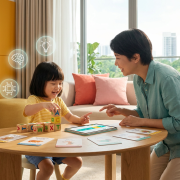
Picture your three-year-old sorting their toy cars by colour, figuring out why a block tower keeps falling, or deciding which steps to follow when getting dressed in the morning. It might look like ordinary play — but these small moments are actually the earliest seeds of computational thinking for pre-schoolers. Long before a child touches a keyboard or meets a robot, they are already practising the core mental habits that underpin problem-solving, logical reasoning, and creative thinking.

Computational thinking is not about programming or screens. It is a way of approaching challenges — breaking big problems into smaller pieces, spotting patterns, and designing step-by-step solutions. And research consistently shows that the earlier children develop these habits of mind, the stronger their academic and life foundations become. In this article, we explore what computational thinking actually means for young children, why starting in the pre-school years matters so much, and how ChildFirst’s curriculum nurtures these skills in a way that feels joyful, natural, and age-appropriate.

What Is Computational Thinking, Really?

Computational thinking is a term coined in educational research to describe a set of problem-solving approaches that computers use — applied to human thinking. Dr. Jeannette Wing, who popularised the concept, described it as a way of “solving problems, designing systems, and understanding human behaviour by drawing on concepts fundamental to computer science.” But do not let that description put you off. For young children, it simply means learning to think clearly, systematically, and creatively when faced with a challenge.

There is a common misconception that computational thinking is synonymous with coding or technology use. In reality, a child does not need a screen to practise it. When a pre-schooler organises their building blocks from tallest to shortest, they are using algorithmic thinking. When they notice that their playdough always cracks when it dries, they are spotting a pattern. These are genuinely computational ideas, expressed through the natural language of play.

Why Start Early? The Case for Pre-School Problem-Solving

The pre-school years, roughly from ages two to six, represent one of the most remarkable windows of neurological development in a child’s life. During this period, the brain forms synaptic connections at an extraordinary rate, and children are naturally predisposed to curiosity, experimentation, and trial-and-error learning. This makes early childhood the ideal time to introduce the habits of mind associated with computational thinking, not through formal instruction, but through well-designed play and exploration.

Studies in developmental psychology suggest that children who engage in structured problem-solving activities during the early years show stronger executive function skills — including working memory, cognitive flexibility, and inhibitory control — as they grow older. These are the very same skills that help children manage complex tasks, regulate their emotions, and persist through academic challenges. Starting early is not about rushing childhood; it is about making the most of a uniquely receptive season of growth.

Singapore’s educational landscape also reflects this understanding. With the nation’s ongoing focus on preparing young people for a technology-driven economy, preschools that embed computational thinking into their early years programmes are giving children a meaningful head start — not just for STEM, but for life.

The Four Pillars of Computational Thinking in Early Childhood

Educators typically identify four core components of computational thinking. Understanding how each one appears in a pre-schooler’s world helps parents and teachers intentionally support its development.

  • Decomposition: Breaking a complex task into smaller, manageable steps. For a pre-schooler, this might look like figuring out how to build a bridge with blocks by tackling one section at a time, rather than trying to do everything at once.
  • Pattern Recognition: Noticing similarities, trends, and regularities. Children do this naturally when they predict what comes next in a story, identify repeated shapes in a mosaic, or realise that their toy car always rolls faster on a smooth surface than a rough one.
  • Abstraction: Focusing on the key details of a problem and setting aside what is not relevant. A child choosing which costume pieces make them look “like a superhero” is practising a form of abstraction — identifying the essential features and ignoring the rest.
  • Algorithmic Thinking: Creating a sequence of steps to solve a problem or complete a task. Morning routines, recipes, and simple games all involve algorithms. When a child explains “first we put in the flour, then the eggs, then we stir,” they are describing an algorithm.

These four pillars are not isolated skills — they work together and reinforce each other. A rich early childhood environment invites children to use all four, often within a single activity or conversation.

Everyday Activities That Build Computational Thinking

One of the most reassuring things about computational thinking for pre-schoolers is that it does not require expensive tools or specialist equipment. Many of the best opportunities already exist in everyday play and routines. The key is for caregivers and educators to ask the right questions and create space for children to reason things through.

Consider the following examples of activities that naturally cultivate computational thinking skills:

  • Sorting and classifying games: Grouping objects by colour, size, shape, or texture helps children practise decomposition and pattern recognition simultaneously.
  • Simple board games and card games: Games with clear rules introduce children to sequential thinking and cause-and-effect reasoning in a low-pressure, enjoyable way.
  • Storytelling and retelling: Asking a child to retell a story in order encourages algorithmic thinking — what happened first, next, and last.
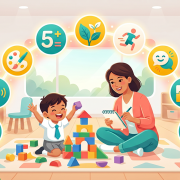
  • Building and construction play: Whether with blocks, magnetic tiles, or recycled materials, construction challenges prompt decomposition (“what do I need to build the wall first?”) and debugging (“why did it fall? what should I change?”).
  • Cooking and baking together: Following a recipe is one of the most intuitive introductions to algorithmic thinking that exists, and children love being involved.

The common thread in all these activities is that the child is actively thinking, making choices, and learning from outcomes. Adults play an important role by encouraging reflection: “What do you think happened?” and “What could we try differently?” are more powerful questions than simply providing the answer.

How an AI Curriculum Brings Computational Thinking to Life

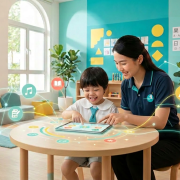
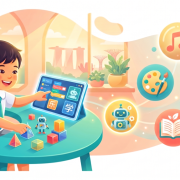
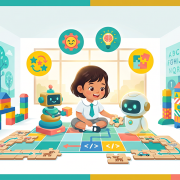
At ChildFirst, computational thinking is not treated as a standalone lesson or a once-a-week activity. Instead, it is woven into the fabric of daily learning through the school’s innovative Artificial Intelligence curriculum. This programme introduces children to the logic and language of AI — not by sitting them in front of a screen, but by engaging them in hands-on, inquiry-based experiences that develop the foundational thinking skills that AI literacy requires.

Children learn to ask questions like “why did this happen?” and “what pattern do I see here?” in age-appropriate contexts. They explore how machines can be taught to recognise images or sort objects, and they begin to understand that the instructions we give computers matter enormously — just like the instructions we give ourselves when we try to solve a problem. This early exposure demystifies AI and positions children as confident, curious thinkers rather than passive consumers of technology.

Equally important is the way this curriculum connects with coding and trilingual learning at ChildFirst. Children explore computational concepts across all three languages of their education — English, Mandarin, and a third language — which deepens their understanding and ensures that problem-solving becomes a cross-domain habit of mind, not a narrow technical skill.

Why Human Skills Matter Just as Much

Here is something worth pausing on: computational thinking is only one side of the equation. The world our children are growing into will be shaped by AI, yes — but it will still belong to humans. The skills that no machine can replicate — empathy, creativity, moral reasoning, collaboration, and emotional intelligence — are just as vital as algorithmic problem-solving. In fact, they are what give computational thinking its purpose and direction.

ChildFirst recognises this deeply. Alongside its AI curriculum, the school’s Human Intelligence curriculum nurtures the social-emotional and interpersonal skills that make children not just capable thinkers, but compassionate and resilient human beings. Children learn to communicate their ideas, navigate disagreements, show kindness, and persevere through difficulty. These are not soft extras — they are core competencies for a meaningful and successful life.

The school also draws on Howard Gardner’s theory of Multiple Intelligences to ensure that every child’s unique strengths are recognised and celebrated. Not every future innovator will think the same way, and ChildFirst’s Multiple Intelligences curriculum ensures that whether a child’s genius lies in music, movement, language, or logic, their learning environment speaks to their individual brilliance.

What Parents Can Do at Home

Parents are a child’s first and most influential teachers, and the home environment is full of natural opportunities to nurture computational thinking. You do not need to be tech-savvy or have any background in computer science. What matters is creating a culture of curiosity and reflection in your household.

Here are some simple, parent-friendly habits that make a genuine difference:

  • Ask “how” and “why” questions often. Instead of telling your child how something works, invite them to wonder about it first. “Why do you think the ice melted?” is a more powerful learning prompt than simply explaining it.
  • Celebrate mistakes as part of learning. When something does not work, treat it as useful information rather than a failure. “Interesting! That didn’t work — what could we try next?” models a problem-solving mindset.
  • Give children manageable choices and challenges. Letting a child figure out how to pack their own bag or plan a simple activity builds the decomposition and sequential thinking skills they need.
  • Read books that involve logic and sequences. Stories with cause-and-effect structures, patterns, or characters who solve problems are great conversation starters about thinking strategies.
  • Play strategy games together. Even simple games like Snakes and Ladders, Uno, or memory matching cards build pattern recognition and rule-following in a warm, shared context.

The goal is not to turn playtime into a lesson. It is to gently reinforce the idea that thinking carefully and creatively is enjoyable — and that challenges are something to lean into, not shy away from.

Raising Future-Ready Thinkers

Computational thinking for pre-schoolers is not a trend or a luxury — it is a genuine foundation for lifelong learning. When young children practise breaking problems apart, spotting patterns, and thinking in sequences, they are building cognitive habits that will serve them across every subject, career, and life challenge they encounter. And when these skills are developed alongside empathy, creativity, and cultural fluency, children are truly prepared for a future we cannot yet fully predict.

At ChildFirst, this is not just an aspiration — it is the everyday reality of every classroom. Through a thoughtfully integrated trilingual curriculum that weaves together AI literacy, human intelligence, and an understanding of each child’s unique multiple intelligences, ChildFirst gives pre-schoolers in Singapore the richest possible start. The result is not just children who can think computationally — it is children who love to think, explore, and grow.

Want to See Computational Thinking in Action?

Visit ChildFirst to discover how our award-winning trilingual curriculum nurtures problem-solving, AI literacy, and irreplaceable human skills — all from the very first years of learning.

Request a School Tour

Hidden Costs of Preschool in Singapore: Fees Beyond the Monthly Bill

When parents in Singapore begin searching for a preschool, the monthly fee listed on a school’s website is usually the first number that catches their eye. It feels like a straightforward cost — pay this amount each month, and your child has a place in the programme. But for most families, the reality of preschool expenses is quite a bit more layered than that single figure suggests.

The hidden costs of preschool in Singapore can add hundreds of dollars to your annual spend, and some of them arrive before your child even sets foot in the classroom. From registration deposits to concert costumes, these expenses are rarely advertised upfront, which can leave parents feeling caught off guard when the invoices start arriving. Understanding what to look out for means you can plan ahead, ask the right questions during school tours, and make a genuinely informed decision about which preschool offers real value for your family.

This guide walks through every category of cost you are likely to encounter beyond the monthly bill — and offers some practical guidance on how to assess whether each one is a worthwhile investment in your child’s early years.

Singapore Preschool Guide

Hidden Costs of Preschool in Singapore

Beyond the monthly fee, discover every cost category so you can budget with confidence and compare schools fairly.

💡 The true annual cost can be significantly higher than 12× the monthly rate

Typical Monthly Fee Range (Before Subsidies)

$800
Entry-level Private

$2,500+
Premium Private

⚠️ This is just the starting point — read on for what else to budget for

💸 8 Hidden Cost Categories to Know

Costs rarely advertised upfront — ask about all of these during your school visit

📋

Registration & Enrolment

$50–$200

Non-refundable application fee + 1–2 months deposit

👕

Uniforms & Supplies

$80–$250

Uniform sets, PE attire, school bag + stationery

🎵

Enrichment Add-ons

$30–$150/mo

Music, dance, coding, speech & drama — often extra

🍱

Meals & Snacks

$100–$250/mo

Lunch + two snack breaks if charged separately

🚌

Excursions & Trips

$15–$60/trip

Science centres, nature parks, cultural venues

🎭

Concerts & Events

$100–$300

Costumes, photos, videography, graduation

🛡️

Insurance Premium

$20–$60/yr

Personal accident coverage during play & school hours

📱

Misc Levies

Varies

Digital platforms, apps, handbooks, admin fees

🏛️ Government Subsidies That Can Help

Singapore provides meaningful support — check your eligibility before finalising your choice

AO SUBSIDY
Anchor Operator scheme

🤝
PO SUBSIDY
Partner Operator scheme

🎒
KiFAS
Kindergarten Fee Assistance

🍼
BABY BONUS CDA
Usable at SPARK-certified schools

💡 Tip: Ask admissions staff to calculate your net payable fees after all applicable subsidies

✅ Smart Questions to Ask on Your School Tour

Use this checklist to get full financial clarity before you sign

📌 What’s included in the monthly fee?

Clarify exactly what the headline rate covers vs. what’s charged extra

📌 Are enrichment activities compulsory?

Compulsory add-ons are effectively part of your true monthly cost

📌 How many major events per year?

Concerts, graduations, and photos can add $100–$300 each

📌 Are meals included or charged separately?

Full-day meal costs can add up to $250/month if not bundled

📌 Is the school SPARK-certified?

Required to use Baby Bonus CDA funds and signals quality standards

📌 Can I see a complete fee breakdown?

Transparency here reflects the school’s broader culture with parents

🏆 What Good Value Really Looks Like

A higher monthly fee can mean better overall value when more is genuinely included

🤖

AI Learning Integrated

Technology literacy as a core subject — not a paid extra

🌏

Trilingual Curriculum

English, Chinese & coding woven into daily learning

🌟

SPARK Certified

National quality standard — CDA-eligible & accredited

🥗

Healthy Pre-school

Formal nutritional accreditation for balanced meals

💬 The Golden Rule of Preschool Budgeting

“Always ask for a complete fee schedule, not just the monthly rate. Cost transparency is a mark of a trustworthy preschool.”

Brought to you by

ChildFirst Preschool Singapore

Award-winning trilingual education · AI + HI + MI curriculum · SPARK certified

Why Monthly Fees Are Just the Beginning

Preschool fees in Singapore vary enormously depending on the type of operator, location, and programme offered. A typical private preschool can charge anywhere from $800 to well over $2,500 per month before government subsidies are applied. What most fee schedules do not immediately reveal, however, are the supplementary costs that accumulate over the course of a year. When you add up registration fees, materials, meals, enrichment activities, and annual events, the true annual spend can be significantly higher than twelve times the monthly rate.

The good news is that these costs are not designed to catch parents out — they reflect the real expenses involved in running a quality early childhood programme. The key is simply knowing what categories exist so you can budget accurately and compare schools on a like-for-like basis. A school that looks more expensive at first glance may actually offer better overall value once you account for what is included versus charged separately.

One-Time Registration and Enrolment Fees

Almost every preschool in Singapore charges a registration or application fee when you first express interest in a place. This is typically a non-refundable administrative charge, ranging from around $50 to $200, that covers the cost of processing your child’s application. It is separate from — and paid before — any confirmation of a place.

Once a place is offered and accepted, many schools also require an enrolment deposit, which can range from one to two months’ fees. This deposit is usually held against the final month’s fees when your child eventually leaves the school, but it does represent a significant upfront cash commitment for families. Some preschools also charge a one-time registration levy or programme fee that covers curriculum materials, administrative setup, and initial assessments. It is always worth asking during your school visit exactly which one-off fees apply and when they are due.

Uniforms, Bags, and School Supplies

Most preschools in Singapore have a standard uniform, and purchasing it is a compulsory cost that is easy to overlook when comparing schools. A typical uniform set — which may include two to three sets of daily wear, a physical education attire, and a school bag — can cost between $80 and $250 depending on the school. Pre-schoolers are also notoriously hard on their clothing, so parents of younger children often find themselves replacing items mid-year.

Beyond uniforms, some schools provide a list of stationery, art materials, or portfolio folders that must be purchased either from the school directly or from a designated supplier. While individual items are inexpensive, the total can add up, particularly at the start of each academic year or when a child moves up to a new level. Always ask for a full list of required materials before you finalise your enrolment so there are no surprises in the first week of term.

Curriculum Enrichment and Programme Add-Ons

This is the category that tends to generate the most variation between schools, and it is arguably the most important to understand clearly. Many preschools offer a base curriculum at the stated monthly fee, then present optional or compulsory enrichment programmes — such as music, dance, speech and drama, or coding — as separate charges. These can range from $30 to $150 per module per month, and families sometimes discover that their child’s day is structured around activities that carry additional costs.

At ChildFirst, the approach is different. The school’s three-pronged curriculum integrates Artificial Intelligence learning, Human Intelligence development, and Multiple Intelligences exploration as core components of every child’s education rather than chargeable extras. This means that when you enrol at ChildFirst, technology literacy, creative thinking, and multilingual communication are woven into the daily programme — not bolted on at additional cost.

When evaluating any preschool, ask specifically: What is included in the monthly fee, and what is charged separately? Understanding this distinction helps you compare schools accurately and avoid the frustration of discovering that the enrichment activities most important to your family come with a separate price tag.

Meals and Snacks

Catering arrangements differ significantly between preschools. Some include one or two meals in the monthly fee; others offer meals as an optional paid service; and a smaller number expect children to bring packed lunches from home. For full-day programmes, the cost of lunch and two snack breaks — if charged separately — can add between $100 and $250 per month to your total spend.

It is also worth enquiring about the school’s nutrition standards and meal provider. Quality catering from a reputable provider costs more than basic meals, but the investment in healthy, balanced nutrition during the early years supports your child’s concentration, growth, and overall wellbeing. Some preschools hold Healthy Pre-school accreditation, which signals a formal commitment to nutritional standards — a useful marker when comparing options.

Excursions, Events, and Concert Fees

Learning does not only happen inside the classroom, and most preschools plan a calendar of outings and special events throughout the year. These typically include educational field trips to science centres, nature parks, or cultural venues, as well as in-house performances and annual concerts. Field trips may be charged per outing, typically between $15 and $60 per child depending on venue entry costs and transport.

Annual concerts and graduation ceremonies are a beloved tradition in many preschools, but they come with their own costs. Families may be charged for concert costumes, professional photography packages, videography, and sometimes even ticket allocations for family members. These charges can collectively amount to $100 to $300 per event, so it is sensible to ask upfront how many major events the school holds each year and what the associated fees tend to be.

Insurance and Miscellaneous Levies

A number of preschools in Singapore include a small annual personal accident insurance premium as part of their fee structure. This is generally a reasonable and worthwhile charge, typically between $20 and $60 per year, that provides coverage for minor injuries that can occur during play. Some schools bundle this into the registration fee; others invoice it separately at the start of each year.

You may also encounter miscellaneous levies for things like digital learning platforms, parent communication apps, school handbooks, or administrative processing during school transfers. None of these are large individually, but they are worth factoring into your overall budget. A quick way to get clarity is to ask the admissions team for a complete breakdown of all fees — both recurring and one-off — before you sign the enrolment agreement.

Government Subsidies That Can Help

It is important to remember that Singapore’s government provides meaningful financial support for early childhood education, and these subsidies can substantially reduce the out-of-pocket cost for eligible families. The Anchor Operator (AO) Subsidy and Partner Operator (PO) Subsidy schemes, along with the Kindergarten Fee Assistance Scheme (KiFAS) and the Baby Bonus Child Development Account (CDA), are all worth understanding thoroughly before you finalise your preschool choice.

Subsidy eligibility is generally tied to household income and the employment status of parents. Singapore Citizens receive priority, but Permanent Residents may also access some assistance. The Ministry of Social and Family Development publishes up-to-date guidance on current subsidy levels, and many preschools have admissions staff who can help you calculate your net payable fees once subsidies are applied. Even for families who do not qualify for income-based subsidies, CDA funds can be used to offset fees at SPARK-certified preschools — which is another reason why accreditation status matters when choosing a school.

How to Evaluate Whether the Extras Are Worth It

Not all additional costs are equal. Some represent genuine enhancements to your child’s education and development; others are more about tradition or administrative convenience. When reviewing a preschool’s full fee structure, it helps to ask yourself a few practical questions for each additional charge.

  • Is this activity or resource directly linked to learning outcomes? Enrichment programmes that develop language, creativity, or critical thinking deliver lasting benefits; concert costumes less so.
  • Is the charge compulsory or optional? Compulsory charges are effectively part of the true monthly cost and should be factored into your comparison from the start.
  • Does the curriculum include this as a core feature at a comparable school? If a higher monthly fee at one school means no additional charges for enrichment, the overall cost may be similar to or lower than a school with a lower headline rate but many extras.
  • Does the school hold recognised accreditations? SPARK certification and other quality markers indicate that the school meets national standards, which provides confidence that fees are being invested meaningfully in your child’s education.

ChildFirst’s trilingual approach is a useful illustration of this principle. English proficiency, Chinese language learning, and even coding skills are developed as integrated parts of the core curriculum at ChildFirst rather than as paid enrichment options. For families who value multilingual competency and technology literacy — which are increasingly essential life skills — this integration represents a meaningful cost advantage when comparing programmes side by side.

Making an Informed Choice for Your Child

Budgeting for preschool in Singapore requires looking well beyond the headline monthly fee. Registration deposits, uniforms, meals, enrichment activities, excursions, and annual events all contribute to the real cost of early childhood education — and understanding each category puts you in a much stronger position to compare schools fairly and plan your family finances confidently.

The most important thing to remember is that cost transparency is a mark of a trustworthy preschool. A school that is willing to walk you through every line of its fee structure during an admissions conversation is one that has nothing to hide — and is likely to be as straightforward and supportive in its day-to-day communication with parents. When you visit a preschool, make a habit of asking for a complete fee schedule, not just the monthly rate. The answers will tell you a great deal about the school’s culture as well as its finances.
Ultimately, the best preschool for your child is one whose values, curriculum, and community align with your family’s priorities. Cost is one important factor in that decision, but it works best as part of a complete picture rather than as the sole consideration.

Curious About What’s Included at ChildFirst?

We believe parents deserve full clarity on fees and curriculum before making one of the most important decisions of their child’s early years. Visit ChildFirst to explore our trilingual, future-ready programme — and ask us anything about our complete fee structure, subsidies, and what your child’s day really looks like.

Request a School Tour

How to Identify Your Child’s Dominant Intelligence: A Parent’s Observation Guide

Every parent has had that moment — watching their child lose themselves completely in a puzzle, or listening to them hum a tune they heard just once and already have memorised. It is tempting to chalk it up to a phase, but what if it is actually a window into how your child’s mind works best?

Dr. Howard Gardner’s theory of Multiple Intelligences suggests that intelligence is not a single, fixed trait measured by a test score. Instead, every child has a unique profile of strengths spanning eight distinct areas — from language and music to movement and interpersonal skills. Identifying your child’s dominant intelligence does not mean putting them in a box; it means giving yourself a map to understand how they learn, play, and connect with the world around them.

This guide is designed for parents of pre-schoolers who want to become more intentional observers of their child’s natural tendencies. You do not need any specialist training — just a little patience, an open mind, and the practical signposts laid out below.

Parent’s Observation Guide

How to Identify Your Child’s
Dominant Intelligence

Based on Dr. Howard Gardner’s theory of Multiple Intelligences — 8 distinct ways children learn, think, and thrive.

8
Intelligence Types

18m–6y
Critical Window

0
Tests Needed

💡

Key Insight: Intelligence is not a single fixed trait — every child has a unique profile of strengths. Identifying it early doesn’t box them in; it gives you a map to understand how they learn best.

The 8 Intelligences at a Glance

Every child has a blend — look for where energy and joy are most consistent

📖
WORD SMART
Linguistic
Loves stories, rhymes, questions & expressing ideas through language

🔢
NUMBER SMART
Logical-Math
Drawn to patterns, sorting, cause-and-effect & figuring out how things work

🎨
PICTURE SMART
Spatial
Thinks in images, builds with blocks, draws detailed pictures & navigates well

🎵
MUSIC SMART
Musical
Hums while playing, picks up melodies fast, attuned to rhythm & pitch

🤸
BODY SMART
Bodily-Kines.
Learns through movement, loves building & physical challenges, highly coordinated

🤝
PEOPLE SMART
Interpersonal
Empathetic, sociable, thrives in group play & naturally takes on leadership

🧘
SELF SMART
Intrapersonal
Highly self-aware, prefers independent play & reflects on feelings deeply

🌿
NATURE SMART
Naturalist
Fascinated by animals, plants & weather — notices details others walk past

Why Early Identification Matters

The pre-school window (18 months – 6 years) is when neural connections form fastest

🧠
Builds Confidence
Learning that aligns with natural strengths creates genuine self-belief

🔍
Sparks Curiosity
Matched learning environments fuel intrinsic motivation to explore

🎯
Avoids Misreads
Restlessness is often a learning mismatch — not a behavioural problem

🌟
Finds Their Niche
Where talent, passion & purpose intersect — discovered early, built lifelong

5 Things to Observe at Home

No testing needed — the clues are already in your child’s daily life

1
🎮 During Free Play
What does your child choose when given completely unstructured time? This is the clearest indicator of natural preference.

2
😤 When Frustrated
Do they talk it out, go quiet, seek others, or move their body? Each coping style reveals a dominant intelligence.

3
📚 During Storytime
Focused on words, illustrations, language rhythm, or characters’ feelings? Each focus points to a different strength.

4
🌳 In Outdoor Spaces
Do they gravitate towards other children, physical challenges like climbing, or examining insects and plants?

5
🆕 Learning Something New
Do they watch first, jump in physically, ask lots of questions, or want to draw it out before starting?

📓
Pro Tip: Keep a Notebook
Jot down standout moments over a few weeks. Patterns will emerge naturally — look for where energy is most consistent and joyful.

Once You’ve Spotted Their Strength…

A 3-step approach to nurturing their dominant intelligence

1
Create More Opportunities
Design activities and home experiences that let their natural strength shine regularly

2
Gently Expose Gaps
Introduce other intelligence areas softly — balanced development, not narrow focus

3
Follow Their Lead
Avoid over-scheduling. Young children learn best through play, exploration & genuine curiosity

ChildFirst’s Three-Pronged Approach

Every child is gifted — education’s job is to find out how

🤖
AI
Artificial Intelligence
Building fluency with technology from the earliest years

❤️
HI
Human Intelligence
Creativity, empathy, resilience & critical thinking that no algorithm can replace

🌈
MI
Multiple Intelligences
All 8 intelligence types engaged meaningfully — every child genuinely seen

Whether your child is word smart, body smart, or nature smart — there is a place at ChildFirst where they are genuinely seen, understood, and challenged to grow.

Key Takeaways for Parents

Every child has a unique intelligence profile — there is no single type of smart, and no child is behind.
The pre-school window is critical — the fastest brain development happens between 18 months and 6 years.
Observation is your best tool — free play, emotional responses, and outdoor behaviour reveal natural strengths clearly.
Strength-led ≠ narrow focus — identifying a dominant intelligence lets you enrich broadly while building on what’s natural.
The right environment multiplies impact — when curiosity meets the right curriculum, every child can truly thrive.

Based on Howard Gardner’s Multiple Intelligences Framework

Infographic by ChildFirst · Singapore’s Award-Winning Trilingual Preschool · childfirst.com.sg

What Are Multiple Intelligences?

First introduced by Harvard developmental psychologist Dr. Howard Gardner in his 1983 book Frames of Mind, the theory of Multiple Intelligences proposed that human cognitive ability is far broader than traditional IQ measures suggest. Rather than a single general intelligence, Gardner identified distinct modes of processing information — each representing a legitimate form of intellectual strength. Over the decades, this framework has been widely adopted in progressive early childhood education because it validates the enormous diversity in how young children think and learn.

The eight intelligences Gardner identified are: Linguistic, Logical-Mathematical, Spatial, Musical, Bodily-Kinaesthetic, Interpersonal, Intrapersonal, and Naturalist. Most people have a blend of several, but children often show a noticeably strong pull towards one or two areas from a very early age. Recognising this early allows parents and educators to provide environments where that natural strength can flourish — and where other intelligences can be gently developed alongside it.

Why Identifying Intelligence Early Matters

The pre-school years — roughly from 18 months to six years old — are a period of explosive brain development. Neural connections form at an astonishing rate during this window, and the experiences children have during these years lay the groundwork for how they approach learning for the rest of their lives. This is precisely why understanding your child’s dominant intelligence during this stage can be so powerful.

When children are taught and engaged in ways that align with their natural strengths, they develop confidence, curiosity, and intrinsic motivation. A child who is highly bodily-kinaesthetic, for example, will thrive with hands-on activities but may disengage quickly from purely verbal instruction. Without an awareness of this preference, parents and teachers can sometimes misread restlessness or inattention as a behavioural issue, when it is really just a learning style mismatch.

Beyond confidence, early identification also supports children in discovering their unique niche — the intersection of talent, passion, and purpose that can guide their personal and academic development. At ChildFirst, this is a cornerstone of the Multiple Intelligences curriculum, which is designed to help every child discover and develop their individual strengths from the earliest years.

The Eight Intelligences Explained for Parents

Here is a practical breakdown of each intelligence, written specifically for parents observing young children at home and at play:

1. Linguistic Intelligence (Word Smart)

Children with strong linguistic intelligence love words — telling stories, asking endless questions, making up rhymes, or reciting phrases from books and songs with impressive accuracy. They often learn to read early, enjoy being read to, and tend to express their feelings and ideas through language with unusual clarity for their age.

2. Logical-Mathematical Intelligence (Number Smart)

These children are drawn to patterns, sequences, and cause-and-effect relationships. You might notice them sorting toys by colour or size without being asked, asking “why” relentlessly, or showing a fascination with counting, categorising, or figuring out how things work. They often enjoy simple puzzles and strategy-based games from a very young age.

3. Spatial Intelligence (Picture Smart)

Spatially gifted children are highly visual. They may spend long stretches building with blocks, drawing detailed pictures, or navigating spaces confidently. They often think in images and may be able to mentally rotate objects or remember the layout of a place they have only visited once.

4. Musical Intelligence (Music Smart)

If your child hums while playing, picks up melodies quickly, taps rhythms on the table, or becomes deeply moved by music — emotionally calm or energised depending on the song — they may have a strong musical intelligence. These children are highly attuned to sound, tone, rhythm, and pitch in ways that go beyond typical enjoyment.

5. Bodily-Kinaesthetic Intelligence (Body Smart)

Children with this strength learn through movement and physical experience. They are often highly coordinated, love dancing, climbing, or building things with their hands, and may struggle to sit still for long periods. Importantly, they process information best when it is linked to physical action rather than passive listening.

6. Interpersonal Intelligence (People Smart)

These children seem naturally attuned to the emotions and moods of others. They tend to be sociable, empathetic, and good at resolving conflicts in their peer group. They thrive in collaborative play, often take on leadership roles naturally, and genuinely enjoy being around other children and adults.

7. Intrapersonal Intelligence (Self Smart)

A child with strong intrapersonal intelligence has a remarkable level of self-awareness for their age. They may show a clear sense of their own preferences and feelings, prefer to process experiences quietly, enjoy independent play, and display a strong sense of personal values and goals — even in early childhood.

8. Naturalist Intelligence (Nature Smart)

These children are fascinated by the natural world — animals, plants, weather, seasons, and living things in general. They notice details outdoors that others walk past, love collecting leaves or rocks, and may show a natural ability to categorise and name different species or natural phenomena.

Everyday Observation Tips: What to Watch For at Home

You do not need to conduct formal assessments to get a sense of your child’s dominant intelligence. The clues are already present in their daily play, conversations, and behaviours. The key is to observe without an agenda — let your child lead, and pay attention to where their energy, focus, and joy consistently land.

Here are some practical things to observe across different home settings:

  • During free play: What does your child choose to do when given completely unstructured time? This is often the clearest indicator of natural preference.
  • When frustrated or upset: Do they talk it out (Linguistic), go quiet and reflect (Intrapersonal), seek out a friend or sibling (Interpersonal), or move their body to self-regulate (Kinaesthetic)?
  • During storytime: Are they focused on the words and narrative, the illustrations, the rhythm of the language, or asking questions about characters’ feelings?
  • In outdoor spaces: Do they gravitate towards other children, towards physical challenges like climbing frames, or towards examining insects and plants?
  • When learning something new: Do they prefer to watch first, jump straight in physically, ask lots of questions, or want to draw it out?

Keep a simple notebook over a few weeks and jot down moments that stand out. Patterns will begin to emerge naturally, and you will start to see your child’s intelligence profile taking shape. Remember, most children will show strengths in more than one area — the goal is to notice where the energy is most consistent and most joyful.

What to Do Once You Identify Your Child’s Strengths

Once you have a clearer picture of where your child’s natural strengths lie, the next step is to create more opportunities for those strengths to shine — while also gently exposing them to areas where they are less naturally inclined. This balanced approach is what leads to well-rounded development rather than a narrow focus on a single talent.

For a linguistically strong child, enriching their world with books in multiple languages can deepen both their love of words and their cognitive flexibility. This is where a trilingual environment becomes particularly powerful. Learning to express ideas in more than one language exercises the linguistic intelligence from multiple angles, building vocabulary, comprehension, and cultural awareness simultaneously. ChildFirst’s approach to nurturing English proficiency in a trilingual environment and its Chinese pre-school and trilingual learning programme are designed with exactly this kind of layered enrichment in mind.

For a child with strong logical-mathematical or spatial tendencies, introducing age-appropriate coding and problem-solving experiences early can be transformative. These children often take to computational thinking intuitively, and structured exposure gives them a constructive outlet for their analytical nature. ChildFirst’s coding meets trilingual learning programme offers a unique space where logic and language development go hand in hand.

Most importantly, avoid the temptation to over-schedule or over-direct. Young children learn best through play, exploration, and genuine curiosity. Your role as a parent is to open doors — the right child will walk through the right one in their own time.

How ChildFirst Supports Every Type of Learner

Understanding your child’s dominant intelligence is only the beginning. The real magic happens when that understanding is met by an educational environment specifically designed to nurture it. ChildFirst’s curriculum is built around the belief that every child is gifted — the job of education is to find out how.

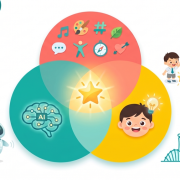
Through its unique three-pronged approach combining Artificial Intelligence (AI), Human Intelligence (HI), and Multiple Intelligences (MI), ChildFirst goes beyond traditional academic preparation. The MI component ensures that children across all eight intelligence types are engaged meaningfully — whether they are a budding musician, a natural leader, a tireless explorer, or a quietly reflective thinker. Meanwhile, the HI focus nurtures the deeply human skills — creativity, empathy, resilience, and critical thinking — that no algorithm can replicate. And the AI curriculum ensures that even the youngest learners develop fluency with the technology that will shape their futures.

This integrated approach means that whether your child is “word smart,” “body smart,” or “nature smart,” there is a place at ChildFirst where they are genuinely seen, understood, and challenged to grow.

Helping Your Child Shine in Their Own Way

Every child arrives in the world with a unique constellation of strengths. The role of a parent — and of great early childhood education — is not to shape children into a single mould, but to help them discover who they already are and give them the tools to build on it.

By observing your child with curiosity and intention, you can begin to see the patterns that point towards their dominant intelligence. And once you see it, you can nurture it — through the activities you choose at home, the conversations you have, and the learning environment you place them in. That small shift in perspective can make an enormous difference in how confidently and joyfully your child engages with the world.

Want to See How We Nurture Every Child’s Unique Intelligence?

Visit ChildFirst to experience our one-of-a-kind trilingual curriculum that combines Multiple Intelligences, Human Intelligence, and AI learning — giving every pre-schooler the environment they need to truly thrive.

Request a School Tour

Why Location Matters: How Your Neighbourhood Shapes Your Child’s Preschool Experience

When parents start searching for the right preschool in Singapore, the checklist often begins with curriculum, fees, and school reputation. Location tends to get treated as a logistical afterthought — something to sort out once everything else lines up. But here’s the thing: where your child spends their early learning years matters far more than most families initially realise.

The neighbourhood surrounding a preschool shapes the daily rhythm of your child’s life. It influences how rested and ready they arrive each morning, the kinds of experiences they’re exposed to beyond the classroom walls, and the sense of community that forms around their earliest friendships. For children between 18 months and six years old — a period that educational researchers widely regard as the most critical window for cognitive, social, and emotional development — environment carries enormous weight.

This article explores why location deserves a much closer look in your preschool search, what to pay attention to in the surrounding neighbourhood, and how the right combination of place and pedagogy can give your child a genuinely enriching start.

ChildFirst Preschool Guide

Why Location Matters for Your Child’s Preschool

Your neighbourhood shapes more than the commute — it shapes your child’s learning, wellbeing, and sense of belonging during their most critical developmental years.

Key Insights at a Glance

🧠
18mo–6yr
Critical window for cognitive, social & emotional development
🌿
3-in-1
Location impacts rest, learning readiness & community bonds
🏡
Beyond
The school gate — neighbourhood IS the extended classroom
🤝
Roots
Community connections support lifelong friendships & family networks
📍

5 Ways Location Shapes Early Learning

😴

Shorter Commutes = Better Rest & Readiness

A child travelling 45+ minutes arrives tired and overstimulated before the day even begins. A nearby school preserves energy for curious, engaged learning.

🌳

Green Spaces Boost Concentration & Imagination

Research shows that access to natural outdoor spaces supports better focus, lower anxiety, and stronger imaginative play in young children.

🏛️

Nearby Facilities Extend the Curriculum

Libraries, community gardens, cultural landmarks, and parks become part of the learning journey — offering real-world experiences no worksheet can replicate.

🔒

Safety & Familiarity Build Emotional Security

Recognising the park around the corner or the coffee shop downstairs gives children a sense of continuity that eases school transitions and builds confidence.

👨‍👩‍👧

Community Connections Create Lifelong Bonds

When classmates live nearby, friendships extend beyond school hours. Parents build informal support networks that make those early parenting years far less isolating.

School Visit Checklist: What to Look For

1
Ease of Access

Safe pedestrian crossings, transport links, manageable travel time

2
Green Spaces Nearby

Parks, open fields, or landscaped areas used in the programme

3
Traffic & Safety

Safe drop-off zone, low congestion during school hours

4
Community Feel

Active neighbourhood life, families present and engaged

5
Nearby Facilities

Libraries, cultural spaces, community centres for learning trips

6
Classroom Environment

Well-ventilated, bright spaces reflecting the school’s educational values

🎓

The ChildFirst Difference: Location + Curriculum

“A beautifully situated preschool with a weak educational programme is a missed opportunity. The goal is to find both together.”

🤖

AI Curriculum

Prepares children for a future where AI mastery is essential

💡

HI Curriculum

Nurtures creativity, empathy, and irreplaceable human skills

🌟

MI Curriculum

Honours every child’s unique strengths and ways of learning

🇸🇬

3 Locations

King Albert Park, Mountbatten & Tampines

🏆

Award-Winning

Best in Trilingualism Pre-School since 2020

🌐

Trilingual

English, Mandarin & Malay or Tamil

The Big Takeaway

Don’t treat location as an afterthought. The right neighbourhood + the right curriculum = an early childhood experience that genuinely sets your child up for life.

Shorter commute
Greener surroundings
Strong community
Thoughtful curriculum

Why Location Is More Than Just Convenience

It’s tempting to think of preschool location purely in practical terms — is it near the MRT? Is it on the way to work? These are reasonable questions, but they only scratch the surface. Location shapes a child’s preschool experience in ways that go well beyond the school gate. The broader neighbourhood, the surrounding environment, and the community your family becomes part of all play a quiet but meaningful role in how your child grows and learns during these formative years.

Research in early childhood development consistently shows that children are highly sensitive to their environments. They pick up on the energy, pace, and character of the spaces they inhabit regularly. A preschool situated in a calm, green, and community-oriented area tends to support lower stress levels and greater readiness to engage with learning. By contrast, a high-traffic, congested, or chaotic surrounding can subtly contribute to overstimulation, particularly in toddlers and young pre-schoolers who are still developing their ability to self-regulate.

Thinking about location as part of the educational experience — rather than separate from it — gives parents a more complete picture of what daily life at a particular preschool will actually feel like for their child.

The Daily Commute: How Travel Time Affects Young Children

Young children thrive on consistency and rest. Long or stressful commutes eat into both. A pre-schooler who travels 45 minutes to an hour each way is spending a significant portion of their energy reserves before they’ve even set foot in the classroom. By the time they arrive, they may already be tired, overstimulated, or hungry — none of which sets the stage for curious, engaged learning.

A preschool that’s reasonably close to home also makes it easier to maintain the kind of stable daily routines that young children depend on. Drop-off and pick-up become less rushed, there’s more flexibility if your child is having a slow morning, and the transition between home and school feels gentler and more manageable. Over weeks and months, these small advantages add up considerably.

There’s also the emotional dimension to consider. Young children often need a familiar, reassuring environment to help them settle confidently into school life. When home and school are part of the same neighbourhood fabric — when your child recognises the coffee shop downstairs or the park around the corner — that continuity can provide a real sense of security during the adjustment period.

The Neighbourhood Environment and What It Teaches

Children are natural observers. They absorb what they see, hear, and experience in their surroundings with remarkable depth. The neighbourhood around a preschool is, in a very real sense, an extension of the learning environment. A school nestled near a park offers spontaneous opportunities for nature-based exploration. One located near a library, a community garden, or a cultural landmark opens doors to incidental learning that no classroom worksheet can replicate.

Even the walkability and green cover of a neighbourhood contribute to early development. Studies have found that access to natural outdoor spaces supports better concentration, lower anxiety levels, and stronger imaginative play in young children. When a preschool’s outdoor activities can spill naturally into the surrounding environment — even occasionally — the richness of early learning expands considerably.

Safety is another dimension of neighbourhood environment that parents rightly prioritise. Well-maintained footpaths, manageable traffic, and a general sense of community watchfulness all contribute to a safer arrival and departure experience, particularly for families who walk or cycle with young children.

Community Connections: Building a Sense of Belonging

One of the less visible but deeply important benefits of choosing a preschool in your own neighbourhood — or one that functions as a genuine community hub — is the social web it creates for your family. When your child’s classmates live nearby, friendships form more naturally and carry beyond school hours. Weekend playdates, chance encounters at the void deck or playground, and shared community events all reinforce the bonds that begin in the classroom.

For parents, being part of a neighbourhood preschool community offers its own form of support. Getting to know other families who share similar values and routines can be enormously reassuring during the early years of parenting. It builds the kind of informal network where parents exchange advice, share resources, and look out for one another — something that’s genuinely hard to replicate when children are scattered across distant parts of the city.

A preschool that is embedded in its local community also tends to develop a stronger sense of identity and purpose. Staff get to know families over time, children grow up alongside familiar faces, and the school becomes a trusted anchor point in neighbourhood life. This sense of rootedness matters deeply to young children, whose emotional security is closely tied to familiar relationships and places.

Nearby Facilities and Learning Opportunities

A preschool’s physical premises tell only part of the story. What surrounds it matters too. Proximity to libraries, community centres, nature trails, cultural spaces, and even well-regarded hawker centres (for community-focused learning walks) can meaningfully enrich the experiential curriculum a school is able to offer.

The best early childhood educators know that learning doesn’t stop at the classroom door. Field trips to nearby locations, spontaneous weather observations in an accessible outdoor space, and walks through a characterful neighbourhood all build vocabulary, curiosity, and a child’s understanding of the wider world. A school that can leverage its surroundings thoughtfully is one that’s making the most of every learning moment available to it.

This is worth asking about during a school visit. Does the preschool make use of nearby facilities as part of its regular programme? Are there planned outdoor activities that take children into the surrounding area? How does the school think about the neighbourhood as part of the learning environment? The answers reveal a great deal about the school’s educational philosophy and ambition.

How the Right Preschool Pairs Location with Curriculum

Location becomes most powerful when it is matched with a curriculum that is equally thoughtful. A beautifully situated preschool with a weak educational programme is a missed opportunity. Equally, a brilliant curriculum delivered in an inaccessible or unsuitable environment creates unnecessary friction in your child’s daily life. The goal is to find both together.

At ChildFirst, each of our centres across Singapore — including King Albert Park, Mountbatten, and Tampines — has been carefully chosen to serve the families in those communities, with spaces designed to support our unique educational approach. Our curriculum brings together three interconnected strands of learning: an Artificial Intelligence curriculum that introduces children to the tools shaping their future, a Human Intelligence curriculum that nurtures creativity, empathy, and critical thinking, and a Multiple Intelligences curriculum that honours the fact that every child has their own unique strengths and ways of learning.

This trilingual approach extends to language as well. Our children develop genuine proficiency across English, Mandarin, and Malay or Tamil, supported by rich English language learning, dedicated Chinese preschool learning, and even coding woven into the trilingual framework — preparing children for a world where digital fluency and multilingualism go hand in hand. When this level of curricular depth is delivered within a well-chosen, community-rooted location, the result is an early childhood experience that genuinely sets children up for life.

What to Look For When Visiting a Preschool Location

A school tour is your best opportunity to experience a location with fresh eyes. Go beyond the classrooms and look at the broader setting with your child’s daily experience in mind. Here are some practical things worth paying attention to:

  • Ease of access: Is the route from home manageable without excessive travel time? Are there safe pedestrian crossings and transport links nearby?
  • Green spaces: Is there a park, open field, or landscaped area within easy reach that the school uses as part of its programme?
  • Safety and traffic: How busy is the road outside during drop-off and pick-up hours? Is there sufficient space for a smooth, safe transition?
  • Community feel: Does the surrounding area feel like a place where families are present and active? Is there a sense of neighbourhood life beyond the school gates?
  • Facilities nearby: Are there libraries, community spaces, or cultural venues that the school might draw on for learning excursions?
  • School environment itself: Are the classrooms well-ventilated, bright, and thoughtfully set up? Does the physical space reflect the school’s educational values?

Trust your instincts here too. Parents often have a strong sense, after walking through a neighbourhood and a school, of whether it feels right for their child. That intuition is worth taking seriously — it’s usually picking up on something real.

Putting It All Together

Choosing a preschool is one of the most important decisions you’ll make for your child in their early years. The curriculum, the teachers, and the school’s values all matter deeply — but so does where that school sits in the world. The neighbourhood surrounding your child’s preschool shapes their daily experience in ways both visible and invisible, from how rested they arrive each morning to the community of families they grow up alongside.

The good news is that you don’t have to choose between a great curriculum and a great location. The right preschool brings both together with care and intention. When you visit, look at the whole picture — the streets outside, the feel of the community, the spaces your child will move through every single day. That’s where the full story of your child’s preschool experience really begins.

Come and See Our Centres for Yourself

Every ChildFirst centre has been thoughtfully located and designed to give your child the best possible start. Experience our award-winning trilingual curriculum, our state-of-the-art facilities, and the warm community that makes ChildFirst a place children love to come to every day.

Request a School Tour

10 Questions Every Parent Should Ask During a Preschool Tour

Walking into a preschool for the first time can feel both exciting and a little overwhelming. The bright colours, the tiny furniture, the cheerful displays on the walls — it all looks wonderful. But looks alone won’t tell you whether this is the right place for your child to spend some of their most formative years.

A preschool tour is your single best opportunity to look beyond the surface and ask the questions that truly matter. Many parents leave tours wishing they had probed a little deeper, only realising later that they forgot to ask about something important — the curriculum philosophy, how disputes between children are handled, or what happens if their child struggles to settle in.

This guide gives you the 10 questions every parent should ask during a preschool tour, along with guidance on what to listen for in the answers. Whether you are exploring your first option or comparing several schools, these questions will help you make a confident, informed choice for your child.

ChildFirst Preschool Guide

10 Questions Every Parent Should Ask During a Preschool Tour

Transform your school visit from a passive viewing into a confident, informed evaluation — ask these essential questions before you decide.

High-quality early childhood education shapes cognitive development, social skills, and long-term academic outcomes. The right questions reveal what really matters.

Why This Tour Matters

10
Essential Questions to Ask
3
Languages in Trilingual Curriculum
SPARK
Gold Standard Accreditation in Singapore
18m+
Age Range for Early Childhood Education

The 10 Essential Questions

01

What Does the Daily Curriculum Look Like?

Ask about structured learning vs. free play balance. Look for a clear educational philosophy — not one that mirrors primary school expectations for young children.

02

How Is Language Learning Approached?

In Singapore’s multilingual context, ask how languages are integrated throughout the day — not treated as token add-ons. Real proficiency comes through meaningful use, not memorisation.

03

How Does the School Incorporate Technology?

Is screen time passive or purposeful and teacher-facilitated? Look for age-appropriate AI and coding concepts balanced with offline, creative, and physical experiences.

04

What Are the Teachers’ Qualifications and Experience?

Check ECDA registration, ongoing professional development, and staff retention rates. Consistent caregiving relationships are critical for young children’s development.

05

What Are the Child-to-Teacher Ratios?

Lower ratios mean more individual attention, better supervision, and calmer classrooms. Ask if ratios are maintained during meals, outdoor play, and rest — not just lesson time.

06

What Safety and Health Standards Are in Place?

Ask about visitor access, emergency protocols, illness communication, and allergy management. Look for the Healthy Pre-school HPB accreditation as a verified quality mark.

07

How Does the School Support Each Child as an Individual?

Ask how teachers identify individual needs and respond in practice. Look for Multiple Intelligences awareness — nurturing linguistic, logical, musical, spatial, and interpersonal strengths.

08

How Do Teachers Communicate with Parents?

Ask about daily reports, digital apps, newsletters, and response times. A school that values parent partnership will have clear, confident answers and welcome family involvement.

09

Is the School Accredited or Award-Recognised?

SPARK certification from ECDA is Singapore’s gold standard for preschool quality. Ask if all campuses are certified and how recently accreditation was renewed — it signals continuous improvement.

10

How Does the School Prepare Children for the Future?

Ask how the school builds critical thinking, creativity, collaboration, and emotional intelligence. The most future-ready preschools nurture both AI literacy and irreplaceable human skills.

5 Key Takeaways

Look beyond the surface. Bright classrooms are appealing, but curriculum philosophy, teaching quality, and safety standards matter far more for your child’s development.

Language integration is key. In Singapore’s multilingual context, look for preschools that weave multiple languages naturally throughout the day — not as separate, token subjects.

Accreditation matters. SPARK certification and Healthy Pre-school accreditation provide independent, verified evidence that a school meets or exceeds Singapore’s quality standards.

Teacher quality is everything. ECDA-registered staff, ongoing professional development, and low staff turnover are hallmarks of a school that invests in its most important asset — its people.

Future-readiness starts now. The best preschools balance AI literacy and digital fluency with creativity, empathy, and emotional intelligence — nurturing the whole child for a lifetime of learning.

Also Observe During Your Visit

😊

Children’s Wellbeing

Do children look engaged, settled, and genuinely happy?

🤝

Staff Warmth

Do teachers speak about children with respect and genuine care?

🏫

Environment Quality

Does the space feel safe, stimulating, and well cared for?

💬

Transparency

Does the school welcome your curiosity and answer openly?

Ready to Ask These Questions in Person?

Visit ChildFirst — Singapore’s award-winning trilingual preschool with SPARK-certified campuses and a future-ready approach to early childhood education.

Request a School Tour →

🏆 Best in Trilingualism Award✅ SPARK Certified🌿 Healthy Pre-school Accredited

Why the Right Questions Make All the Difference

Choosing a preschool is one of the most significant decisions you will make in your child’s early years. Research consistently shows that high-quality early childhood education has lasting effects on a child’s cognitive development, social skills, and even long-term academic outcomes. Yet many parents focus primarily on location and fees, sometimes overlooking the curriculum philosophy or the quality of day-to-day teaching. A well-prepared list of questions transforms a school tour from a passive viewing into an active evaluation — and it signals to the school that you are an engaged, thoughtful parent, which is something great educators always welcome.

Question 1: What Does the Daily Curriculum Look Like?

Ask the school to walk you through a typical day, not just in broad strokes but in genuine detail. How much time is devoted to structured learning versus free play? How does the curriculum balance academic foundations with creative exploration and physical activity? A strong preschool curriculum should feel purposeful without being rigidly academic — young children learn best through play, movement, and hands-on experience. Listen for a curriculum that has a clear educational philosophy behind it, rather than one that simply mirrors primary school expectations for much younger children.

It is also worth asking how the curriculum evolves as children move through different age groups. The needs of an 18-month-old differ dramatically from those of a child in Kindergarten 2, and the school’s programme should reflect that developmental understanding clearly.

Question 2: How Is Language Learning Approached?

In Singapore’s multilingual environment, language development is particularly important, and parents are right to ask detailed questions about how a school nurtures it. Does the school teach in multiple languages, and if so, how are they integrated throughout the day? Is there a risk that one language will dominate while others become token additions to the timetable?

At ChildFirst, for instance, trilingual learning is woven throughout the entire curriculum rather than treated as a separate subject. Children are immersed in English, Mandarin Chinese, and a third language in a way that feels natural and contextual, not forced. This kind of genuinely integrated approach is what you should be looking for when you ask this question — because real language proficiency develops through meaningful use, not memorisation.

Question 3: How Does the School Incorporate Technology?

Technology in early childhood education is a topic that divides opinion, but the most thoughtful schools have a clear and considered position on it. Ask whether the school uses educational technology and, importantly, how it is used. Is screen time passive and unguided, or is it purposeful and teacher-facilitated? Does technology complement hands-on learning, or does it replace it?

Forward-thinking preschools recognise that today’s pre-schoolers will grow up in a world where artificial intelligence is part of everyday life. Introducing age-appropriate AI and technology concepts through play and exploration — alongside coding basics such as those found in coding-integrated trilingual learning — helps children develop digital fluency without sacrificing childhood. That said, quality schools will always balance this with plenty of offline, creative, and physical experiences.

Question 4: What Are the Teachers’ Qualifications and Experience?

Your child will spend most of their time with their classroom teachers, so this question is non-negotiable. Ask about the minimum qualifications required for all teaching staff, not just the lead teachers. Are they registered with the Early Childhood Development Agency (ECDA) in Singapore? Do they receive regular professional development and training? High staff retention rates are also a good sign — children benefit enormously from consistent caregiving relationships, and a school with frequent staff turnover may signal deeper management or culture issues worth exploring.

Question 5: What Are the Child-to-Teacher Ratios?

This is one of those practical questions that parents sometimes feel awkward asking, but it is absolutely essential. Lower ratios mean more individual attention for each child, better supervision, and a calmer classroom environment. In Singapore, ECDA sets minimum ratio requirements, but excellent preschools often go beyond the regulatory baseline. Ask whether the stated ratios are maintained throughout the day, including during meals, outdoor play, and rest times — not just during structured lesson periods.

Question 6: What Safety and Health Standards Are in Place?

Safety encompasses far more than locked gates and clean classrooms. Ask about the school’s visitor access policies, emergency protocols, and how they handle illness — both preventing the spread of sickness and communicating with parents when a child is unwell. Enquire about food preparation and allergy management if your child has any dietary needs. Schools that hold the Healthy Pre-school accreditation from the Health Promotion Board in Singapore have met independently verified standards for nutrition, physical activity, and hygiene, which is a reassuring mark to look out for.

Question 7: How Does the School Support Each Child as an Individual?

Every child learns differently, and great preschools acknowledge this not just in theory but in practice. Ask how teachers identify and respond to individual learning needs, interests, and temperaments. What happens if a child is finding something difficult, or conversely, if they are ready to move ahead? How does the school support children who are shy, anxious about separation, or who have additional learning needs?

This is also a good moment to ask about the school’s philosophy on child development more broadly. Does it recognise the range of ways children can be intelligent and capable — going beyond traditional academic measures? Multiple Intelligences theory, for example, holds that children possess a variety of cognitive strengths, from linguistic and logical abilities to musical, spatial, and interpersonal talents. A school that actively nurtures this breadth of potential will help your child discover what makes them uniquely capable.

Question 8: How Do Teachers Communicate with Parents?

Transparent, regular communication between school and home is a hallmark of quality early childhood education. Ask how teachers share updates about your child’s progress — is it through a daily report, a digital app, a weekly newsletter, or informal chats at pick-up? How quickly do staff respond to parental concerns, and who should you contact if you have a serious issue? Also ask what the school’s policy is on parent involvement: are families welcomed into the classroom, invited to observe lessons, or included in learning events throughout the year? A school that genuinely values parent partnership will have clear, confident answers to all of these.

Question 9: Is the School Accredited or Award-Recognised?

Accreditations and awards are not just wall decorations — they provide independent verification that a school meets or exceeds established standards. In Singapore, the SPARK (Singapore Pre-school Accreditation Framework) certification is the gold standard for preschool quality assurance, assessed by ECDA. Ask whether the school holds SPARK certification, whether all its campuses are certified, and how recently the certification was renewed. Any reputable awards in curriculum innovation, language education, or child development are also worth enquiring about, as they indicate a school that continually strives to improve and be recognised by its professional community.

Question 10: How Does the School Prepare Children for the Future?

This might be the most revealing question on this list, because it invites the school to articulate its core educational vision. What kind of learner — and person — does the school aim to develop? Ask specifically how the programme builds skills that will matter as children grow: critical thinking, creativity, collaboration, adaptability, and communication. Ask how the school balances academic readiness with the development of emotional intelligence, resilience, and confidence.

The most future-ready preschools think carefully about the world their students will inhabit. Developing human intelligence skills — empathy, creativity, moral reasoning, and social awareness — alongside technical literacy ensures that children are prepared not just for primary school, but for a lifetime of meaningful learning and contribution. A school that can speak fluently and passionately to this question is one that genuinely cares about its children’s long-term flourishing, not just their next assessment.

Making Your Final Decision

No checklist can fully capture the feeling of walking into a preschool and sensing that it is the right fit for your child. But the right questions will get you much closer to that certainty. When you visit, pay attention not just to the answers you receive, but to how they are given. Do staff speak about children with warmth and respect? Do the children in the classrooms look engaged, settled, and happy? Does the environment feel safe, stimulating, and cared for?

Trust your instincts — but let informed questions sharpen them. A school that welcomes your curiosity, answers transparently, and clearly has a thoughtful educational philosophy behind everything it does is a school worth considering seriously. Your child deserves nothing less than that level of care and intentionality in their earliest years of learning.

Ready to Ask These Questions in Person?

Visit ChildFirst to experience our award-winning trilingual curriculum, SPARK-certified campuses, and future-ready approach to early childhood education — and see for yourself why so many Singapore families choose us.

Request a School Tour

Screen-Free Coding Activities for Young Children: Unplugged Learning Ideas

When most people hear the word “coding”, they picture a screen, a keyboard, and lines of text scrolling past. But here’s something that surprises many parents: some of the most powerful early coding experiences happen away from any device entirely. Screen-free coding activities — sometimes called “unplugged learning” — introduce young children to the building blocks of computational thinking through play, storytelling, movement, and creative problem-solving.

For pre-schoolers between the ages of two and six, the hands-on, physical nature of unplugged coding is not just a workaround for limited screen time; it is often the ideal starting point. Young children learn best through touch, movement, and social interaction, and these activities are designed to meet them exactly where they are. Whether your child loves building with blocks, acting out stories, or going on pretend treasure hunts, there is an unplugged coding activity that will spark their curiosity.

In this article, we explore what unplugged coding really means, why it matters for early childhood development, and share seven practical, tried-and-tested activities you can introduce at home or in the classroom today.

Unplugged Learning Guide

Screen-Free Coding for
Young Children

7 hands-on unplugged activities that build logical thinking, creativity, and a love of learning — no device required.

🎯 Ages 2–6
🏠 Home & Classroom
💡 Zero Screen Time

🤔

What Is Unplugged Coding?

Unplugged coding teaches the core concepts of programming — sequences, loops, conditionals, and pattern recognition — entirely through play, movement, and storytelling. No screens, no devices, no logins. Just learning through doing.

🔢

Sequences

🔁

Loops

Conditionals

🔍

Patterns

🐛

Debugging

📋

Algorithms

Why It’s So Valuable for Pre-Schoolers

Beyond reducing screen time, these activities build skills that last a lifetime

🧠

Computational Thinking

Break problems into steps, spot patterns, think logically

🤝

Collaboration

Communication, turn-taking, and perspective-taking

📚

Early Literacy

Narrative structure, sequencing stories, directional language

🔢

Early Numeracy

Counting, patterns, and early algebraic thinking

🌱

Growth Mindset

Make mistakes, learn from them, and try again with confidence

The Activities

7 Unplugged Coding Activities to Try

All you need is curiosity — most materials are already at home

🤖
Activity 1

Human Robot Game

Give precise step-by-step commands to a friend playing a robot. Discover why vague instructions go hilariously wrong!

🎯 Teaches: Algorithms

🃏
Activity 2

Story Sequencing Cards

Arrange picture cards in order, then introduce a deliberate mistake for your child to “debug” and fix.

🎯 Teaches: Sequencing & Debugging

🔴
Activity 3

Pattern Play

Use buttons, blocks, or socks to create patterns. Ask children to spot the rule and continue the sequence.

🎯 Teaches: Pattern Recognition

🎲
Activity 4

Coding Board Games

Games like Robot Turtles teach if-then rules. Talk through the thinking aloud: “That’s an if-then rule, just like coding!”

🎯 Teaches: Conditionals

🗺️
Activity 5

Build & Navigate Mazes

Create mazes with tape or cushions. Write the route as arrows before walking it — real algorithm-writing!

🎯 Teaches: Problem-Solving & Planning

📿
Activity 6

Binary Bead Bracelets

Two colours of beads = 0s and 1s. Encode names as a secret binary bracelet — a fun, meaningful craft!

🎯 Teaches: Binary & Fine Motor Skills

🗝️
Activity 7

Treasure Hunt Algorithms

Write step-by-step instructions instead of clues. Swap roles so children create the algorithm for you to follow!

🎯 Teaches: Algorithms & Precision

Pro Tips

Making It Fun at Home

🐾

Follow Your Child’s Lead

Creative divergence is where the deepest learning happens — go with it!

💬

Use the Vocabulary Naturally

Words like “algorithm”, “debug”, and “loop” are accessible when learned through experience.

⏱️

Keep Sessions Short

20 minutes of engaged play beats an hour of reluctant participation. Finish while it’s fun!

🎉

Celebrate Mistakes

“That didn’t work — let’s figure out why!” models exactly the mindset you want to build.

🦕

Connect to Their Interests

A dinosaur-themed activity will always engage a dino-lover more than a generic one.

The Big Takeaway

For pre-schoolers, screen-free coding is the real thing. The logical thinking, creative problem-solving, and collaborative communication built through unplugged play are the exact foundations children need — whether they grow up to be programmers, artists, scientists, or something the world hasn’t imagined yet.

Skills Built Across Every Activity

🧩

Logical Thinking

🎨

Creativity

🗣️

Communication

💪

Perseverance

🌐

Spatial Reasoning

What Is Unplugged Coding and Why Does It Matter?

Unplugged coding refers to activities that teach the core concepts behind computer programming — things like sequences, loops, conditionals, and pattern recognition — without using any technology at all. The term was popularised by educators and researchers who recognised that the thinking skills behind coding are far more important than the tools used to express them. When a child learns to give precise, step-by-step instructions to a friend playing the role of a robot, they are practising the same logical reasoning that underlies all software development.

This approach is especially well-suited to pre-schoolers because it removes the barriers that screens can create for very young learners. There are no login screens, no fine motor skills required for typing, and no frustration when a programme does not load. Instead, the learning is immediate, physical, and deeply social. Children can make mistakes, laugh about them, and try again — which is, of course, exactly how real programmers work too.

Why Screen-Free Activities Are So Valuable for Pre-Schoolers

Beyond the practical advantage of reducing screen time, unplugged coding activities offer a rich cluster of developmental benefits that extend well beyond technology. Computational thinking — the ability to break a problem into smaller steps, spot patterns, and think logically — is a skill that helps children in mathematics, language, social situations, and creative endeavours throughout their entire lives.

Unplugged activities also naturally encourage collaboration. When children work together to navigate a maze or sequence a story, they are practising communication, turn-taking, and perspective-taking alongside their logical thinking. These are precisely the kinds of human skills that remain irreplaceable even as artificial intelligence becomes more prevalent in daily life. At ChildFirst, this balance between technology readiness and deeply human capabilities is central to the curriculum — you can read more about how this plays out in practice through our Human Intelligence (HI) curriculum, which nurtures creativity, empathy, and social awareness from the earliest years.

Additionally, many of these activities quietly build early literacy and numeracy skills. Sequencing a story requires an understanding of narrative structure. Counting steps in a maze reinforces number sense. Pattern activities lay the groundwork for algebraic thinking. The learning is genuinely multidimensional.

7 Engaging Screen-Free Coding Activities to Try

1. The Human Robot Game

This is one of the most popular unplugged coding activities for a very good reason: it is hilarious, endlessly replayable, and brilliantly educational. One child plays the “programmer” and gives instructions to a friend or parent who plays the “robot”. The robot must follow only the exact instructions given — moving forward, turning left, picking up an object — without using any common sense to fill in the gaps. Children quickly discover that vague instructions lead to funny results, and that precision matters enormously.

Start simple: place a soft toy across the room and ask your child to guide you to it using only specific commands. As they grow more confident, you can introduce more complex challenges like picking up the toy and placing it in a box. This activity directly teaches the concept of algorithms — precise, ordered sets of instructions — in a way that sticks because it is experienced rather than explained.

2. Sequencing Stories with Picture Cards

Sequencing — putting events in the correct order — is one of the foundational concepts in coding. Before a computer can follow a programme, every step must be in exactly the right place. Picture cards bring this concept to life beautifully for young children. Draw or print a series of simple story cards (a seed being planted, watered, sprouting, and becoming a flower, for example) and ask your child to arrange them in order.

Once they have mastered a simple sequence, try introducing a deliberate mistake and asking them to debug it — another genuine programming concept. “The flower is before the seed — does that make sense? How would we fix it?” This kind of structured play lays groundwork that children will build on for years to come, and it connects naturally to early literacy as children learn to think about stories having a beginning, middle, and end.

3. Pattern Play with Everyday Objects

Recognising and creating patterns is at the heart of both mathematics and coding. The wonderful thing is that pattern activities require almost no preparation at all. Gather a collection of household objects — buttons, building blocks, coloured pasta, socks — and begin a simple pattern for your child to continue. Red, blue, red, blue. Big, small, big, small. Circle, circle, triangle.

As children grow more confident, invite them to create their own patterns for you to continue, or challenge them to spot the “rule” in a pattern you have set without telling them what it is. This kind of pattern recognition thinking is directly transferable to coding, where programmers constantly look for repeating structures and loops that can simplify their work. It is also wonderfully low-stakes — there is no right or wrong, just exploration.

4. Coding Board Games

Several beautifully designed board games have been created specifically to introduce coding concepts to young children without a screen in sight. Games like Robot Turtles, Code Master, and Hopscotch (the physical version) use cards, tiles, and game pieces to teach sequencing, conditionals, and logical planning. They are designed to be played collaboratively or competitively, and most can be adapted for different ages and ability levels.

Even classic games like Snakes and Ladders or simple card games involve turn-taking, following rules, and strategic thinking — all skills that underpin computational reasoning. The key is to talk through the thinking as you play: “If you land on a snake, then you go down — that is an if-then rule, just like in coding!” Making the connection explicit, in simple language, helps children begin to see logical thinking as something they already do naturally.

5. Building Mazes and Navigating Them

Mazes are a wonderfully hands-on way to explore directions, decision-making, and problem-solving. Use masking tape on the floor, arrange cushions and books, or draw a simple grid on paper. Then ask your child to find a path from start to finish, either by physically walking through it or by drawing the route step by step. The challenge of navigating a maze requires children to plan ahead, consider alternatives, and backtrack when a path does not work — all genuine coding behaviours.

For an added layer of complexity, introduce the idea of writing down the route as a series of arrows or symbols before attempting to walk it. This turns the activity into a real algorithm-writing exercise. And when the route does not work as planned? That is debugging — a skill that even professional software engineers use every single day.

6. Binary Bead Bracelets

Binary code — the system of ones and zeroes that underpins all digital communication — sounds deeply technical, but it can be introduced to pre-schoolers in a genuinely accessible way using two colours of beads. Assign one colour to represent “0” and another to represent “1”, then show children how letters or simple patterns can be encoded using combinations of the two. Making a bracelet with their name encoded in binary is an activity that delights many young children precisely because it feels like a secret code.

This activity also develops fine motor skills as children thread the beads, making it a lovely dual-purpose craft project. You do not need to go into the mathematics of binary at this age — simply experiencing the concept that information can be represented in two states, and that sequences of those states carry meaning, is more than enough. The idea will resurface meaningfully when children encounter it again in later years.

7. Treasure Hunt Algorithms

A treasure hunt is already a favourite activity for young children, and with a small twist it becomes a powerful coding lesson. Instead of giving children clues to follow intuitively, write or draw the instructions as a step-by-step algorithm: “Walk three steps forward. Turn right. Walk to the blue cushion. Look underneath.” Ask children to follow the instructions exactly as written, then swap roles so they can write the algorithm for you to follow.

This activity brings together sequencing, directional language, and the critical idea that instructions must be both complete and precise. It is also a wonderful way to incorporate language development — particularly relevant in multilingual households or settings where children are learning to express direction and sequence in more than one language. Our Coding Meets Trilingual Learning approach at ChildFirst explores exactly this kind of rich connection between language and logical thinking.

Tips for Making Unplugged Coding Fun at Home

The most important thing to remember when introducing any of these activities is that the goal is curiosity, not correctness. Pre-schoolers who feel free to experiment, make mistakes, and try again are developing exactly the growth mindset that underpins both coding and lifelong learning. Here are a few practical tips to keep things enjoyable:

  • Follow your child’s lead. If they want to extend an activity in an unexpected direction, go with it. That creative divergence is often where the deepest learning happens.
  • Use the vocabulary naturally. Words like “algorithm”, “sequence”, “loop”, and “debug” are perfectly accessible to young children when they are introduced through experience rather than definition.
  • Keep sessions short. Twenty minutes of engaged, playful activity is far more valuable than an hour of reluctant participation. Finish while the fun is still going.
  • Celebrate mistakes out loud. Saying “oh, that did not work — let’s figure out why!” models exactly the attitude you want your child to develop.
  • Connect to their interests. A child who loves dinosaurs will engage far more enthusiastically with a dinosaur-themed sequencing activity than a generic one.

You do not need any special equipment or a background in technology to make these activities work. Most of what is needed is already in your home, and the most important ingredient — a willing, curious adult to play alongside — is already there too.

How Unplugged Learning Connects to Broader Development

It is worth stepping back to appreciate just how much ground these seemingly simple activities cover. A child who has spent time as a “human robot” has practised giving precise instructions, listening carefully, and thinking logically. A child who has built and navigated a maze has explored spatial reasoning, problem-solving, and perseverance. A child who has sequenced a story has developed narrative understanding, cause-and-effect thinking, and early literacy skills. None of this happens in isolation — it all weaves together into the kind of well-rounded intellectual foundation that prepares children for a complex future.

At ChildFirst, this holistic view of early childhood learning is embedded in every aspect of our curriculum. Our Artificial Intelligence (AI) curriculum introduces children to technology thoughtfully and progressively, while our Multiple Intelligences (MI) curriculum ensures that every child’s unique strengths — whether in language, music, spatial reasoning, or interpersonal skills — are recognised and nurtured. Unplugged coding activities fit naturally into this philosophy because they develop logical and creative thinking simultaneously, rather than treating them as separate concerns.

The children growing up today will enter a world shaped profoundly by artificial intelligence. But as educators and parents, our job is not simply to prepare them to use technology — it is to prepare them to think clearly, create boldly, and collaborate generously regardless of whatever tools the future holds. Unplugged coding activities, joyful and low-tech as they are, are a meaningful step in exactly that direction.

Getting Started: You Already Have Everything You Need

Screen-free coding is not a compromise or a substitute for the “real thing” — for pre-schoolers, it is the real thing. The logical thinking, creative problem-solving, and collaborative communication skills that these activities build are precisely what children need as their foundation, whether they go on to become programmers, artists, scientists, or something the world has not yet imagined. And the beautiful thing is that most of these activities cost nothing, require no special knowledge, and can be woven naturally into everyday play.

Start small. Try the Human Robot Game after dinner this week. Pull out some colourful buttons and make a pattern together. Go on a treasure hunt with a hand-drawn map and step-by-step instructions. You may be surprised by how quickly your child picks up the underlying ideas — and how much fun you have along the way.

Want to see how we bring coding and creativity together for young learners?

Visit ChildFirst to discover our unique trilingual curriculum, where AI readiness, human intelligence, and multiple intelligences come together to future-proof your child — from the very start.

Request a School Tour

Complete Guide to Childcare Subsidies in Singapore: CCS, AICS & KiFAS Explained

Raising a child in Singapore is one of the most rewarding experiences a parent can have — and also, let’s be honest, one of the most expensive. Preschool fees can feel daunting, especially during the early years when childcare is a daily necessity. The good news is that the Singapore government offers meaningful financial support through three key subsidy schemes: the Child Care Subsidy (CCS), the Additional Subsidy (AICS), and the Kindergarten Fee Assistance Scheme (KiFAS). Understanding how these work can make a significant difference to your household budget.

Whether your child is just starting out at an infant care centre or heading into their kindergarten years, this guide breaks down everything you need to know about childcare subsidies in Singapore — who qualifies, how much you can receive, and how to apply without the headache. Think of it as your friendly, no-jargon roadmap to making preschool more affordable.

Singapore Childcare Guide

Childcare Subsidies in Singapore

CCS, AICS & KiFAS explained — who qualifies, how much you save, and how to apply

🏭 Licensed Childcare Centres
🏫 MOE Kindergartens

⚡ Key Savings Snapshot

After combining available subsidies, families can save significantly every month

💰
$710
Max CCS / Month
🌟
~$0
Net Fees (CCS+AICS)
🏠
$7.5K
KiFAS Income Cap

🇹🇸 The 3 Main Subsidy Schemes

🏠

CCS

Child Care SubsidyFoundation

The baseline subsidy for families with children in licensed childcare centres. At least one parent must be working, studying, or unable to care for the child due to a medical condition.

✅ Citizens & PRs
✅ Income-Based
✅ Licensed Centres

AICS

Additional SubsidyExtra Relief

Extra financial relief on top of CCS for lower- and middle-income households. Calculated using per capita income (PCI). Can bring net fees down to near-zero for the lowest income brackets.

✅ Citizens Only
✅ Both Parents Working
✅ Auto-Assessed w/ CCS
🏫

KiFAS

Kindergarten Fee AssistanceK1 & K2

Designed for children (ages 5–6) attending MOE kindergartens. Families earning $3,000 or below may attend kindergarten at no cost. Partial assistance available up to $7,500/month household income.

✅ Citizens Only
✅ MOE Kindergartens
✅ Annual Renewal

📋 Quick Comparison at a Glance

SchemeWho QualifiesKey RequirementWhere
CCSCitizens & PRs1 working parent; income-basedLicensed centres
AICSCitizens onlyBoth parents working; low PCILicensed centres
KiFASCitizens onlyHousehold income ≤ $7,500/mthMOE kindergartens
💡

Pro Tip: CCS and AICS can be received simultaneously — apply for both at the same time through LifeSG or ECDA’s Child Care Link portal.

📋 How to Apply: 5 Simple Steps

1

Enrol in a licensed ECDA childcare centre

Confirm the centre participates in the ECDA subsidy scheme before enrolling.

2

Log in to LifeSG or the ECDA portal via Singpass

Both parents’ income data is pulled automatically from IRAS via Myinfo.

3

Submit your subsidy application

Fill in household income, employment status, and number of household members. AICS PCI is calculated automatically.

4

Await approval (a few weeks)

Once approved, subsidies are applied directly to monthly fees — you simply pay the reduced amount.

5

Review and renew annually

Keep income info updated. KiFAS requires annual renewal; notify your centre of any significant income changes.

💡 Tips to Maximise Your Subsidy

Apply Early

Subsidies are not backdated — apply as soon as your child is enrolled to avoid missing out.

📄

Keep Records Updated

Outdated Myinfo income records can cause incorrect subsidy calculations — keep your profile current.

🏷

Choose Anchor/Partner Operators

ECDA-regulated fee caps at anchor and partner operator preschools make subsidies stretch further.

👥

Combine CCS + AICS

Both can be received simultaneously — eligible families should apply for both at the same time.

📚

5 Things to Remember

CCS is for Citizens & PRs at licensed childcare centres — at least one parent must be working.

AICS is Citizens-only and auto-assessed alongside CCS — no separate form needed.

KiFAS applies only to MOE kindergartens — not private or anchor operator preschools.

Apply via LifeSG or ECDA portal using Singpass — your preschool admin team can guide you.

Subsidies are reviewed periodically — check ECDA’s website for the latest figures and eligibility rules.

About ChildFirst

Award-Winning Trilingual Preschool in Singapore

SPARK-certified locations at King Albert Park, Mountbatten & Tampines. Eligible for CCS and AICS. Our team is happy to guide you through subsidy applications.

🏭 SPARK Certified
🥇 Best in Trilingualism
💻 AI + HI + MI Curriculum

Request a School Tour →

Infographic by ChildFirst • childfirst.com.sg • Subsidy figures are indicative — visit ECDA.gov.sg for the latest rates

What Are Childcare Subsidies in Singapore?

Childcare subsidies in Singapore are government-funded financial assistance programmes designed to reduce the out-of-pocket costs that families pay for early childhood education and care. Administered primarily by the Early Childhood Development Agency (ECDA), these subsidies are applied directly to your child’s fees at licensed childcare centres and MOE kindergartens, meaning you pay less each month without needing to claim reimbursement separately.

There are three main schemes to be aware of: the Child Care Subsidy (CCS), which applies to childcare centres; the Additional Subsidy (AICS), which provides further relief for lower-income households; and the Kindergarten Fee Assistance Scheme (KiFAS), which supports families whose children attend MOE kindergartens. Each scheme has its own eligibility criteria, calculation method, and application process — but together, they form a comprehensive safety net that helps many Singapore families access quality early childhood education.

Child Care Subsidy (CCS): The Foundation of Support

The Child Care Subsidy (CCS) is the baseline subsidy available to most Singapore families who enrol their children in licensed childcare centres. To qualify, at least one parent must be working, studying, or unable to care for the child due to a medical condition or disability. Singapore Citizen children are eligible for the full CCS, while Permanent Resident children may receive a lower rate of support.

The amount you receive under CCS depends on your household’s gross monthly income (GMI) — that is, the combined income of both parents before deductions. Families with a lower GMI receive a higher subsidy, and the support scales progressively so that those who need it most benefit the most. For infant care, subsidies can be substantial, given that infant care fees tend to be higher than toddler or pre-schooler rates.

Here is a general overview of how the CCS works for childcare centres (figures are indicative and subject to ECDA updates):

  • Full-day childcare (Singapore Citizens): Subsidies range from around $150 to $710 per month depending on income bracket and whether the child is in infant care or childcare.
  • Part-day childcare: Lower subsidy amounts apply for part-day enrolment.
  • Working vs non-working mothers: If the mother is not working, the subsidy is reduced, though a base amount may still apply in certain circumstances.

It is worth checking the ECDA website or speaking to your chosen preschool’s administration team for the most current subsidy tables, as figures are reviewed periodically.

Additional Subsidy (AICS): Extra Help for Lower-Income Families

On top of the CCS, families who earn less receive the Additional Subsidy (AICS), which provides extra financial relief specifically for lower- and middle-income households. The AICS is means-tested, meaning the subsidy amount is calculated based on your family’s per capita income (PCI) — your household’s gross monthly income divided by the number of people living in your home.

The AICS is particularly valuable because it can significantly bring down the net fees payable to near-zero for families in the lowest income brackets. For Singapore Citizen children enrolled in full-day childcare, some families may pay as little as a few dollars per month after both CCS and AICS are applied. The scheme recognises that quality early childhood education should be accessible to every child regardless of family income, and it goes a long way towards making that a reality.

Key points to note about AICS eligibility:

  • The child must be a Singapore Citizen to qualify for AICS.
  • Both parents must be working (or meet specific exemption criteria such as being a full-time student, conscript, or having a medical condition).
  • The household per capita income must fall within the qualifying range set by ECDA.
  • The child must be enrolled in a licensed childcare centre that participates in the ECDA subsidy scheme.

If your family qualifies for AICS, it is automatically assessed alongside your CCS application — so you do not need to submit a separate form specifically for this additional layer of support.

KiFAS: Subsidy Support for Kindergartens

The Kindergarten Fee Assistance Scheme (KiFAS) is designed for families whose children attend MOE kindergartens, which operate within primary schools across Singapore. Unlike CCS and AICS, which apply to licensed childcare centres, KiFAS is specifically for the kindergarten level (K1 and K2, typically ages 5 and 6) within the MOE kindergarten programme.

KiFAS is income-based and structured so that Singaporean children from lower-income families can access kindergarten education at minimal or no cost. Families with a gross monthly household income of $3,000 and below may receive full fee assistance, meaning their child attends kindergarten essentially for free. The scheme scales upwards, with partial assistance available for households earning up to $7,500 per month.

Important things to know about KiFAS:

  • Eligibility: The child must be a Singapore Citizen enrolled in an MOE kindergarten.
  • Income ceiling: Gross monthly household income must not exceed $7,500 (or a per capita income of $1,875) to qualify for any level of assistance.
  • Application: Parents apply through the MOE kindergarten when enrolling their child, and the school will guide you through the necessary documentation.
  • Annual renewal: KiFAS assistance is reviewed annually, so you will need to update your income information each year to continue receiving support.

It is worth noting that KiFAS applies specifically to MOE kindergartens, not to private or anchor operator preschools. If your child attends a preschool that is not under the MOE kindergarten umbrella, the CCS and AICS schemes would be the relevant subsidies instead.

CCS vs AICS vs KiFAS: Quick Comparison

To help you see the differences at a glance, here is a simple breakdown of the three main subsidy schemes:

SchemeWho It’s ForKey RequirementWhere It Applies
CCSSingapore Citizens and PRsAt least one working parent; income-basedLicensed childcare centres
AICSSingapore Citizens onlyBoth parents working; lower per capita incomeLicensed childcare centres
KiFASSingapore Citizens onlyHousehold income ≤ $7,500/monthMOE kindergartens only

How to Apply for Childcare Subsidies

Applying for CCS and AICS is straightforward once you know the steps. The process is handled through the LifeSG app or the ECDA’s Child Care Link portal, and your chosen childcare centre can often guide you through it. Here is what the process generally looks like:

  1. Enrol your child in a licensed childcare centre — The centre must be licensed by ECDA and participating in the subsidy scheme. Confirm this when you shortlist centres.

  2. Log in to LifeSG or the ECDA portal — You will need your Singpass to access the application. Both parents’ income information will be required, typically via Myinfo data pulled from IRAS.

  3. Submit your subsidy application — Fill in the required details including household income, employment status, and the number of persons in your household. For AICS, the per capita income will be calculated automatically.

  4. Await approval — Processing typically takes a few weeks. Once approved, the subsidy is applied directly to your monthly childcare fees, so you simply pay the reduced amount.

  5. Review annually — Your subsidy is reassessed periodically, especially if your income changes. Keep your information updated to ensure you receive the correct amount of support.

For KiFAS, the application is handled directly through the MOE kindergarten at the point of enrolment. The school’s administrative team will advise you on the documents needed, which typically include proof of income such as payslips or CPF contribution history.

Practical Tips for Maximising Your Subsidy

Understanding the schemes is one thing — making sure you get the most out of them is another. Here are some practical suggestions to help you navigate the process smoothly:

  • Apply early. Subsidies are not backdated in most cases, so apply as soon as your child is enrolled to avoid missing out on financial support during the processing period.
  • Keep your income documents updated. Outdated income records can lead to incorrect subsidy calculations. Ensure your Myinfo profile reflects your current employment status.
  • Check your centre’s fee structure. Some preschools are classified as anchor operators or partner operators under ECDA, which means they follow regulated fee caps — making subsidies stretch even further.
  • Inform the centre of any changes. If your employment status or household income changes significantly, notify your child’s centre as this may affect your subsidy amount.
  • Combine subsidies where possible. CCS and AICS can be received simultaneously, so eligible families should apply for both at the same time.

How ChildFirst Supports Families Through Subsidies

At ChildFirst, we believe that every child deserves access to exceptional early childhood education — and we are committed to helping families navigate the financial side of preschool as smoothly as possible. Our administrative team is well-versed in the ECDA subsidy schemes and is always happy to guide parents through the application process, answer questions about eligibility, and clarify how subsidies will be applied to your child’s fees.

ChildFirst is a licensed preschool with SPARK-certified locations across Singapore, including King Albert Park, Mountbatten, and Tampines — all of which are eligible for CCS and AICS where applicable. Beyond the practical support with subsidies, what truly sets ChildFirst apart is the quality of education your child receives. Our unique trilingual curriculum integrates Artificial Intelligence (AI), Human Intelligence (HI), and Multiple Intelligences (MI) to prepare children not just for primary school, but for a future shaped by technology and creativity.

Our curriculum also places great emphasis on language development. Whether it is nurturing English proficiency, building a strong foundation in Chinese language learning, or even exploring how coding connects with trilingual learning, ChildFirst offers a rich, holistic environment where pre-schoolers genuinely thrive. When you invest in your child’s early education — and subsidies help make that investment more manageable — you are laying the foundation for a lifetime of curiosity and capability.

Making Preschool More Affordable for Singapore Families

Childcare subsidies in Singapore — whether CCS, AICS, or KiFAS — exist because the government recognises that quality early childhood education is not a luxury; it is a necessity. Understanding which schemes apply to your family, how much support you can expect, and how to apply confidently means you can focus on what truly matters: choosing the right environment for your child to grow, learn, and flourish.

If you are still exploring preschool options and want to understand how subsidies would apply specifically to ChildFirst’s programmes, our friendly team is just a message away. We would love to walk you through everything and show you what makes ChildFirst such a special place for pre-schoolers across Singapore.

Curious About Fees, Subsidies, and What ChildFirst Has to Offer?

Come and see our award-winning trilingual learning environment for yourself. Our team will be happy to walk you through our curriculum, facilities, and how childcare subsidies can be applied to your child’s enrolment.

Request a School Tour

What Is Play-Based Learning and Why Do Singapore Preschools Use It?

If you have ever watched a young child completely absorbed in building a block tower, narrating an elaborate story with toy figures, or mixing colours with paint-covered fingers, you have witnessed something far more significant than simple fun. You have seen a child’s brain at work. Play-based learning is the approach that harnesses this natural energy and curiosity, turning everyday play into one of the most powerful engines for child development we know of.

For parents in Singapore navigating the many preschool options available, the term “play-based learning” comes up often — but what does it actually mean in practice? Why have so many Singapore preschools, including award-winning institutions, built their entire curriculum philosophy around it? And most importantly, is it really the best preparation for your child’s future? This article answers all of those questions, exploring the science, the practice, and what to look for in a preschool that gets it right.

Singapore Preschool Guide

What Is Play-Based Learning?

How Singapore preschools use the science of play to build smarter, more capable, and emotionally resilient children

18mo–6yrs
PRIME WINDOW
5 Types
OF PLAY
4 Domains
OF GROWTH

Play-Based Learning Defined

Play-based learning uses play as the primary vehicle for exploration and discovery. Children are active participants — building, creating, pretending, and problem-solving in ways that feel natural. Based on research by Piaget and Vygotsky, it is the most effective approach for early childhood development.

💡

Play-based ≠ unstructured free time. Educators intentionally design environments and activities so specific learning goals are woven into every play experience.

5 Types of Play in Early Childhood

Each type builds different developmental skills

🎭

Dramatic Play

Role-play & storytelling build empathy and narrative thinking

🧱

Constructive Play

Building with blocks & clay develops spatial & engineering thinking

🏃

Physical Play

Running & climbing build gross motor skills and resilience

🎲

Games with Rules

Turn-taking & fairness build strategic thinking and emotional regulation

🌊

Sensory Play

Water, sand & textures spark scientific curiosity and inquiry

Why Singapore Preschools Use It

Policy + Research + Future Readiness

📋

MOE & ECDA Endorsed

The NEL (Nurturing Early Learners) framework places learning through play at its core — a policy position grounded in developmental research.

🧠

Optimal Learning State

Children aged 18 months to 6 years learn best when engaged, motivated, and emotionally safe — conditions that good play naturally creates.

🚀

Future-Ready Skills

In an AI-driven world, creativity, collaboration, and critical thinking — all nurtured through play — are the skills that matter most.

4 Key Benefits for Young Children

Evidence-based outcomes across all developmental domains

🧩

Cognitive Development

Problem-solving through play builds cognitive flexibility and early academic foundations more durably than drill-based instruction.

→ Cause & effect • Number sense • Critical thinking

💬

Language & Literacy

Children narrate, negotiate, and discuss during play — extending vocabulary naturally. Especially powerful in multilingual environments like Singapore.

→ Vocabulary • Fluency • Multilingual acquisition

❤️

Social & Emotional

Children learn to share, resolve conflicts, manage frustration, and celebrate others — the building blocks of emotional intelligence.

→ Empathy • Resilience • Teamwork

Creativity & Imagination

Open-ended play with no single correct answer trains divergent thinking — the creative human skill that AI can never replace.

→ Innovation • Divergent thinking • Imagination

Does Play Mean Less Academic Prep?

No. Research consistently shows children in high-quality play-based programmes demonstrate stronger literacy, numeracy, and executive function when entering primary school — often outperforming peers from drill-based preschools.

🏆

Quality play-based learning = stronger academic outcomes when implemented by trained educators who observe and extend play with intention

Support Play-Based Learning at Home

Simple, powerful ways for parents to extend the learning

1

Follow Your Child’s Lead

Let them choose the activity. Children learn most deeply when intrinsically motivated.

2

Ask Open-Ended Questions

Try “I wonder what would happen if…” instead of questions with single correct answers.

3

Embrace Mess & Process

Resist tidying mid-activity or fixing constructions. The exploring IS the learning.

4

Read & Tell Stories Together

Storytelling is a form of play that builds vocabulary, comprehension, and imagination simultaneously.

5

Choose Active Screen Time

Not all screen time is equal. Favour interactive, creative digital experiences over passive viewing.

🌱

Play Is the Work of Childhood

The early years are a window of extraordinary opportunity. Play-based learning works with children’s natural curiosity to build the cognitive, social, emotional, and creative foundations every child needs to thrive in a rapidly changing world.

🤖 AI Literacy
🧠 Human Intelligence
🌟 Multiple Intelligences
🌏 Trilingual Immersion

Request a School Tour →

SPARK-Certified · Best in Trilingualism · King Albert Park · Mountbatten · Tampines

What Is Play-Based Learning?

Play-based learning is an educational approach that uses play as the primary vehicle through which children explore, discover, and make sense of the world around them. Rather than having children sit and receive information passively, play-based learning invites them to be active participants — building, creating, pretending, experimenting, and problem-solving in ways that feel entirely natural to them. It is grounded in decades of research from developmental psychologists, most notably Jean Piaget and Lev Vygotsky, both of whom identified play as central to how children construct knowledge and develop language, reasoning, and social understanding.

It is worth noting that play-based learning is not the same as unstructured free time, though free play does play a valuable role within it. In a well-designed preschool programme, educators thoughtfully plan the environment, materials, and activities so that specific learning goals are woven into the play experience. A child sorting coloured blocks by shape is developing early mathematical thinking. A group of pre-schoolers negotiating the rules of a pretend restaurant are practising communication, cooperation, and even early literacy. The learning is real — it simply does not look like a traditional classroom lesson.

The Different Types of Play in Early Childhood

Not all play is the same, and understanding the variety helps parents appreciate just how rich and layered a play-based curriculum can be. Educators typically recognise several distinct forms of play, each contributing differently to a child’s growth:

  • Dramatic or pretend play — Children take on roles, create imaginary scenarios, and develop narrative thinking and empathy by stepping into someone else’s shoes.
  • Constructive play — Building with blocks, Lego, clay, or recycled materials develops spatial reasoning, engineering thinking, and fine motor skills.
  • Physical or outdoor play — Running, climbing, and balancing activities build gross motor skills, body awareness, and resilience through manageable physical challenges.
  • Games with rules — Board games, simple card games, and group activities teach turn-taking, fairness, strategic thinking, and emotional regulation when things do not go to plan.
  • Exploratory or sensory play — Water play, sand trays, and mixing materials engage children’s senses and encourage scientific curiosity and inquiry.

A quality preschool programme incorporates all of these play types throughout the day, ensuring children are stretched across multiple areas of development — not just one or two.

Why Do Singapore Preschools Use Play-Based Learning?

Singapore’s Ministry of Education (MOE) and the Early Childhood Development Agency (ECDA) have both identified play as a cornerstone of effective early childhood education. The Nurturing Early Learners (NEL) framework, which guides curriculum development for Singapore preschools, explicitly places learning through play at its heart. This is not simply a fashionable trend — it is a policy position grounded in research showing that children aged 18 months to six years learn most effectively when they are engaged, motivated, and emotionally safe, all conditions that good play naturally creates.

There is also a broader, forward-looking reason. Singapore’s education system has long been respected internationally for its rigour, but there is growing recognition that the skills children will need in an AI-driven, rapidly changing world go well beyond rote knowledge. Skills like creativity, collaboration, adaptability, and critical thinking are deeply nurtured through play in the early years. Preschools in Singapore that invest seriously in play-based learning are not just following guidelines — they are making a considered investment in children’s long-term capability and wellbeing.

Key Benefits of Play-Based Learning for Young Children

The body of research supporting play-based learning is substantial, and the benefits span virtually every domain of early childhood development. Here is what the evidence consistently shows:

Cognitive Development

When children play, they are constantly problem-solving. A child trying to balance an uneven block tower is experiencing cause and effect. A child figuring out how much “pretend money” to give for their toy ice cream is developing number sense. These self-directed, motivated moments of thinking build cognitive flexibility and early academic foundations far more durably than drill-based instruction at this age.

Language and Literacy

Play is extraordinarily rich in language. Children narrate, negotiate, explain, question, and argue during play in ways that extend vocabulary and develop conversational fluency naturally. In a multilingual environment like Singapore, play provides an authentic context for children to hear and use different languages without the pressure of formal assessment. This is particularly valuable for trilingual programmes, where immersion through play helps children acquire languages in a meaningful, low-anxiety setting. You can read more about how this works in our approach to nurturing English proficiency in a trilingual environment and our approach to Chinese pre-school and trilingual learning.

Social and Emotional Development

Perhaps the most profound benefits of play-based learning lie in the social and emotional domain. When children play together, they learn to share, take turns, resolve conflicts, manage frustration, and celebrate each other’s successes. These are the building blocks of emotional intelligence — skills that researchers like Daniel Goleman have linked to long-term success and wellbeing. A child who has had rich, supported social play experiences in their preschool years carries those interpersonal skills into primary school and beyond.

Creativity and Imagination

Open-ended play, where there is no single correct answer or outcome, is the ideal training ground for creative thinking. When a child transforms a cardboard box into a rocket ship, they are exercising the same mental flexibility and divergent thinking that will serve them as innovators and problem-solvers in adulthood. In a world where artificial intelligence can handle routine and repetitive tasks, creative human thinking becomes all the more precious — and it starts with imaginative play in the earliest years.

Does Play-Based Learning Mean Less Academic Preparation?

This is one of the most common concerns parents raise, and it deserves a direct answer: no. A well-implemented play-based curriculum does not trade academic readiness for fun. Rather, it builds academic foundations in a way that is developmentally appropriate and deeply effective. Research consistently shows that children who experience high-quality play-based early education demonstrate stronger literacy, numeracy, and executive function skills when they enter primary school — often outperforming peers who attended more formal, drill-based preschools.

The key word here is quality. Play-based learning works best when it is intentionally designed by trained educators who understand child development, who observe children carefully, and who know how to extend and enrich play experiences to maximise learning. It is not about leaving children to their own devices and hoping for the best. It is about creating the right conditions, asking the right questions, and providing just the right level of challenge to keep each child growing. When this is done well — combined with purposeful technology integration and multilingual exposure — the results can be remarkable. Our coding meets trilingual learning programme is one example of how structured play-based experiences can introduce even quite complex concepts to young children in ways that feel exciting rather than daunting.

How ChildFirst Brings Play-Based Learning to Life

At ChildFirst, play-based learning is not a standalone methodology — it is the thread that runs through every aspect of our unique three-pronged curriculum. Our approach combines Artificial Intelligence (AI) literacy, Human Intelligence (HI) development, and Multiple Intelligences (MI) nurturing — and each of these strands is brought to life through purposeful, engaging play.

Our EdnoLand curriculum technology creates immersive, playful learning environments where children encounter coding concepts, storytelling, music, movement, and problem-solving as part of a seamlessly integrated daily experience. Rather than treating academic skills and play as separate activities, we design every moment with intention — so that a child building a structure in the play corner might be developing spatial intelligence, collaborating in Mandarin with a classmate, and exploring basic engineering principles all at once. This holistic approach reflects Howard Gardner’s theory of Multiple Intelligences, recognising that every child has a unique profile of strengths and that great early education meets children where they are.

Our SPARK-certified campuses across Singapore — including King Albert Park, Mountbatten, and Tampines — are designed with play-based learning in mind, featuring state-of-the-art facilities that invite curiosity and hands-on exploration at every turn. We believe that the physical environment itself is a teacher, and we invest carefully in spaces that spark imagination while supporting the rich trilingual immersion our curriculum is built upon.

What Parents Can Do to Support Play-Based Learning at Home

The wonderful thing about play-based learning is that it does not stop at the school gate. Parents play a vital role in extending and enriching what children experience in preschool, and it does not require any specialist knowledge or expensive materials. Here are some simple, effective ways to support your child’s learning through play at home:

  • Follow your child’s lead — Let them choose the game or activity and observe what interests them. Children learn most deeply when they are intrinsically motivated.
  • Ask open-ended questions — Instead of “What colour is that?”, try “I wonder what would happen if we mixed those two colours together.” Questions that invite thinking are far more powerful than those with a single correct answer.
  • Embrace mess and process — Resist the urge to tidy up during creative activities or to “fix” a child’s construction. The process of exploring and experimenting is where the learning happens.
  • Read and tell stories together — Storytelling is a form of play, and it builds vocabulary, comprehension, and imagination simultaneously. Make it interactive by asking children to predict what happens next or to change the ending.
  • Limit screen time for passive consumption — Not all screen time is equal. Interactive, creative digital experiences can support learning, but passive viewing limits the active engagement that play requires.

Small, consistent moments of playful engagement at home compound beautifully over time, reinforcing the foundations your child is building at preschool and strengthening the parent-child bond in the process.

Play Is the Work of Childhood — and It Prepares Children for Life

The early years of a child’s life are a window of extraordinary opportunity. The brain is developing at a pace it will never match again, and the experiences children have during this time shape not just what they know but how they think, feel, and relate to others for years to come. Play-based learning respects this truth. It works with children’s natural drive to explore and discover, rather than against it, building the cognitive, social, emotional, and creative foundations that every child needs to thrive.

Singapore’s preschools have embraced this approach because the evidence for it is clear and compelling — and because parents, educators, and policymakers alike recognise that preparing children for the future means nurturing far more than academic knowledge alone. At ChildFirst, we take this responsibility seriously, combining the best of play-based pedagogy with future-ready curriculum innovation to give every child the richest possible start in life.

Want to See Play-Based Learning in Action?

Visit ChildFirst to experience our unique three-pronged curriculum, where play-based learning meets trilingual immersion, AI literacy, and Multiple Intelligences development — all designed to future-proof your child from the very earliest years.

Request a School Tour

First Day of Preschool in Singapore: How to Prepare Your Child (and Yourself)

The night before your child’s first day of preschool, you might find yourself laying out their school bag, double-checking their water bottle, and feeling a surprising mix of excitement and anxiety — and that’s completely normal. For many Singapore families, enrolment in preschool marks the very first time a child spends structured time away from home, and the emotions that come with it are real for both parent and child alike.

The good news is that with the right preparation, the first day of preschool doesn’t have to be overwhelming. In fact, it can be the beginning of one of the most joyful chapters of your child’s early life. This guide walks you through practical, developmentally sound steps to help your little one settle in confidently — and to help you feel ready too.

ChildFirst Preschool Guide

First Day of Preschool in Singapore

How to prepare your child — and yourself — for this exciting milestone

5
Prep Steps

5
Readiness Signs

5
Day-Of Tips

3 Key Takeaways

The essentials every Singapore parent needs to know

📚

Preparation Is Gradual

Start weeks before — visit the school, build routines, and practise short separations for a smoother first day.

💕

Parents Feel It Too

Your emotions at drop-off are completely normal. Stay calm and keep goodbyes warm but brief — children take their cues from you.

🌟

Adjustment Is Non-Linear

A dip in week 2 or 3 is perfectly normal. Prioritise rest, calm afternoons, and open communication with teachers.

✅ Is Your Child Ready? 5 Signs to Look For

Most children are ready between 18 months and 3 years — look for these signals

🦻
Basic Self-Care
Hand-washing, toilet use with help, self-feeding

🔎
Curiosity & Interest
Shows interest in books, other children, new activities

🗣
Follows Instructions
Responds to simple requests like “put the toy in the box”

👋
Tolerates Brief Separation
Can spend short periods with a grandparent or caregiver

💬
Expresses Needs Verbally
Even a small vocabulary helps communicate with teachers

💡 A little anxiety about new situations is completely normal and is not a reason to delay enrolment.

5 Steps to Prepare Before the First Day

The most effective preparation happens in the weeks before — not the morning of

1

Visit the School Together

Walk through classrooms, see play areas, and meet teachers in a low-pressure setting before the start date.

🏠 Reduces first-day anxiety

2

Establish a Morning Routine

Start practising the school-day routine 1–2 weeks early. Familiarity becomes a source of comfort.

☀️ Children thrive on predictability

3

Use Books & Stories

Read picture books about starting school. Stories normalise new experiences and build emotional vocabulary.

📖 Builds emotional readiness

4

Practise Short Separations

Leave with a trusted caregiver for 1–2 hours. Always say goodbye and return when promised. This builds trust in reunification.

💒 Goodbye becomes easier

5

Talk Positively & Honestly

Use warm, enthusiastic language. Acknowledge that feeling nervous is okay — avoid over-promising or dismissing worries.

💭 Honest reassurance wins

🎉 Tips for the First Day Itself

When the big day arrives, keep these in mind

⏱️

Arrive Early

No rush — let your child settle before the full group arrives.

🧸

Bring a Comfort Item

A small toy or family photo tucked in the bag can be reassuring.

👋

Hand Over Confidently

Greet the teacher warmly, then say a cheerful, clear goodbye.

💬

Keep Farewell Consistent

Use the same phrase each day — it gives children a reliable script.

🚫

Don’t Peek Through Windows

Most children settle within minutes. Watching often prolongs distress.

A smooth transition is built gradually — not achieved in a single morning. Trust the process, trust your child, and trust yourself.

How ChildFirst Supports Every Child

A unique three-pronged trilingual curriculum built for Singapore’s future

🧠

AI Curriculum

Age-appropriate, playful technology introduction for future readiness

💙

HI Curriculum

Emotional resilience, social skills & self-regulation for confident transitions

🌟

MI Curriculum

Multiple Intelligences approach — every child’s unique strengths are celebrated

🌎

Trilingual

English, Chinese & Coding — rich communication from day one

SPARK-Certified
Healthy Pre-School Accredited
Best in Trilingualism Award

Why the First Day of Preschool Is Such a Big Deal

Starting preschool is far more than just a logistical change to the family schedule. For young children, it represents their first real encounter with a world beyond the home — new adults to trust, new friends to make, new rules to follow, and new experiences to absorb. Research in early childhood development consistently shows that how children experience this transition can shape their attitude towards learning for years to come.

In Singapore, where the pre-school landscape is rich and varied, parents often feel additional pressure to choose the “right” school and ensure their child starts on the best possible footing. Understanding that a smooth transition is built gradually — not achieved in a single morning — is perhaps the most important mindset shift a parent can make.

Is Your Child Ready? Signs to Look Out For

Most children are developmentally ready to begin preschool between the ages of 18 months and three years, though readiness looks different for every child. Rather than focusing on a specific age, look for a cluster of readiness signals that suggest your little one is prepared for group learning environments.

  • Basic self-care skills: Can your child manage simple tasks like washing their hands, using the toilet with some assistance, and feeding themselves?
  • Curiosity about the world: Does your child show interest in books, other children, or new activities?
  • Ability to follow simple instructions: Can they respond to straightforward requests like “put the toy in the box” or “come and sit down”?
  • Some tolerance for brief separations: Have they spent short periods of time away from you with a grandparent or caregiver without prolonged distress?
  • Beginning to express needs verbally: Even a small vocabulary helps children communicate with teachers and peers.

If your child ticks most of these boxes, they are likely ready — even if they still feel nervous. A little anxiety about new situations is completely developmentally appropriate and is not a reason to delay enrolment.

How to Prepare Your Child Before the First Day

The most effective preparation happens in the weeks and days leading up to the first day, not the morning of. Small, consistent steps help your child build a mental picture of preschool life so that it feels familiar rather than foreign when they finally walk through the door.

Visit the School Together Beforehand

If possible, arrange a visit to the preschool before the official start date. Walking through the classrooms, seeing the play areas, and meeting the teachers in a low-pressure setting goes a long way in reducing first-day anxiety. Many preschools in Singapore, including ChildFirst, offer school tours specifically for this purpose — giving both children and parents a chance to ask questions and familiarise themselves with the environment. You can request a school tour to get started.

Establish a Morning Routine Early

Children thrive on predictability. In the week or two before preschool begins, start practising the morning routine you’ll follow on school days — waking up at the same time, having breakfast together, getting dressed, and heading out. When the actual first day arrives, the routine itself becomes a source of comfort because it already feels familiar. Keep the morning calm and unhurried where possible, as a rushed start can heighten a child’s anxiety before they’ve even left the house.

Use Books and Stories to Introduce Preschool Life

Picture books about starting school are a wonderful, gentle way to introduce the concept of preschool to young children. Stories normalise the idea of going to school, making new friends, and feeling a little nervous at first — all through characters your child can relate to. After reading, invite your child to talk about what they noticed or how they think the characters felt. This kind of conversation builds emotional vocabulary and helps children identify and process their own feelings about the upcoming change.

Practise Short Separations at Home

If your child is not yet used to being apart from you, begin practising short separations in the weeks before school starts. Leave them with a trusted family member or caregiver for an hour or two, and be consistent about saying goodbye and returning when you said you would. This builds what child psychologists call “trust in reunification” — the understanding that when a parent leaves, they always come back. It is this trust, built quietly before school even begins, that makes goodbye at the classroom door so much easier.

Talk About Preschool in a Positive, Honest Way

The language you use about preschool matters enormously. Speak about it with genuine warmth and enthusiasm — “You’re going to learn so many exciting things” and “Your teacher is really looking forward to meeting you” are the kinds of phrases that build positive anticipation. At the same time, avoid over-promising. If your child asks whether they’ll cry, it’s perfectly fine to say “You might feel a little sad at first, and that’s okay — and I’ll always come to pick you up.” Honest reassurance is far more effective than dismissing worries entirely.

How to Prepare Yourself as a Parent

Here’s something that doesn’t get said often enough: the first day of preschool is an emotional event for parents too, and it’s important to acknowledge that. Letting go — even briefly — of a child you’ve been caring for around the clock is a significant emotional moment. Many parents describe feeling teary in the car park, or anxious throughout the morning until pick-up time. These feelings are not a sign of overprotectiveness; they’re a natural response to a meaningful transition.

One of the most helpful things you can do is to keep your own emotions in check during the drop-off itself. Children are extraordinarily perceptive, and if they sense that you are anxious or upset, they are likely to feel the same way. Take a breath, smile genuinely, and keep goodbyes warm but brief. A long, drawn-out farewell — however well-intentioned — can actually make separation harder for both of you.

It also helps to build a support network with other parents at the school. Sharing experiences, tips, and the occasional reassuring message in a parent group chat can make the adjustment period feel much less isolating. Most preschools in Singapore foster a genuine sense of community, and connecting with other families early is well worth the effort.
Tips for the First Day Itself

When the big day finally arrives, a few practical steps can make the morning smoother for everyone involved.

  • Arrive a little early so there’s no rush, and your child has time to settle in before the full group arrives.
  • Bring a comfort item if the school permits it — a small soft toy or a photo of the family tucked into the bag can be surprisingly reassuring.
  • Hand over with confidence. Greet the teacher warmly, help your child do the same, and then say goodbye clearly and cheerfully. Lingering at the door prolongs the emotional intensity for everyone.
  • Keep your farewell phrase consistent. Saying the same thing each day — such as “I’ll pick you up after lunch, and I can’t wait to hear about your day” — gives children a reliable script to hold onto.
  • Resist the urge to peek through the window. Most children settle within minutes of a parent leaving, and teachers are highly skilled at redirecting little ones into activities. Watching from outside often prolongs the child’s distress rather than easing it.

What to Expect in the Weeks That Follow

It’s worth setting realistic expectations: adjustment to preschool is rarely a linear process. Many children have a wonderful first week and then hit a harder patch in week two or three, once the novelty wears off and the reality of the new routine sets in. This is perfectly normal and is not a sign that the school is wrong for your child.

During the adjustment period, prioritise rest and keep after-school time calm and low-key. Pre-schoolers who are processing lots of new information and social experiences will often be more tired and emotionally sensitive than usual. Extra cuddle time, quiet play at home, and a consistent bedtime routine all support the nervous system as it adapts to the new demands of school life.

Keep communication open with your child’s teachers. Most preschools in Singapore have regular channels for parent updates — whether through an app, a communication book, or daily check-ins at pick-up. Use these touchpoints to share anything relevant about your child’s mood or home environment, and to receive feedback on how they’re settling in at school.

How ChildFirst Supports Children Through the Transition

At ChildFirst, we understand that every child comes to preschool with a unique set of experiences, strengths, and needs. That’s precisely why our curriculum is built around a three-pronged approach that nurtures the whole child — not just academic readiness. Our Human Intelligence (HI) curriculum focuses on developing emotional resilience, social skills, and self-regulation — the very capacities that help children navigate transitions like starting preschool with greater confidence and ease.

Alongside this, our Multiple Intelligences (MI) approach recognises that children learn and express themselves in different ways. Whether your child is a natural mover, a budding artist, a keen listener, or a curious problem-solver, our teachers are trained to identify and build on each child’s unique strengths from the very beginning. This means no child arrives on their first day and feels like they don’t belong — because the classroom is designed to welcome every kind of learner.

Our trilingual learning environment, which encompasses English, Chinese, and even coding as a form of language, means children are gently immersed in rich, meaningful communication from day one. And our Artificial Intelligence (AI) curriculum introduces technology in age-appropriate, playful ways — ensuring that the skills children develop today lay a genuine foundation for the world they will grow up in.

All ChildFirst centres are SPARK-certified and Healthy Pre-school accredited, reflecting our commitment to providing safe, nurturing, and high-quality environments where children don’t just attend school — they genuinely thrive.

Every Big Journey Starts With One Small Step

The first day of preschool is a milestone that you and your child will both remember — not because it was perfect, but because it was the beginning of something wonderful. With thoughtful preparation, honest conversations, and a warm and capable school environment, children adapt to preschool more readily than most parents expect. And more often than not, within a few weeks, the child who once clung to your leg at the door will be running in ahead of you, eager to see their friends and teachers.

Trust the process, trust your child, and trust yourself. You’ve already done the most important work by caring enough to prepare well.

Ready to Find the Right Preschool for Your Child in Singapore?

Visit ChildFirst and see firsthand how our award-winning trilingual curriculum, caring teachers, and future-focused learning environment help every child begin their preschool journey with confidence and joy.

Request a School Tour

Full-Day vs Half-Day Preschool in Singapore: Which Is Right for Your Child?

Choosing a preschool in Singapore is one of the most meaningful decisions you will make as a parent. Once you have narrowed down your shortlist, a question almost always comes up: should my child attend a full-day or half-day preschool programme? It sounds like a simple logistical choice, but it touches on much more — your child’s readiness, your family’s schedule, your budget, and the kind of early learning experience you want your little one to have.

There is no single correct answer, and the good news is that both options can set a child up beautifully for the years ahead. What matters most is understanding what each programme actually involves, and then matching that to your child’s temperament, developmental stage, and your family’s unique circumstances. This guide walks you through everything you need to know about full-day versus half-day preschool in Singapore, so you can feel confident in the choice you make.

ChildFirst Preschool Guide

Full-Day vs Half-Day Preschool
in Singapore

A quick guide to choosing the right programme for your child and family

At a Glance: What’s the Difference?

Singapore preschools typically offer two main programme structures

Half-Day

Duration

~3–4 hours (morning or afternoon)

Best For

Younger children (18 months–3 yrs), families with available caregivers

Cost

Generally more affordable

Full-Day

Duration

~7am–7pm (structured learning + meals + rest)

Best For

Dual-income families, socially confident or energetic children

Cost

Higher fees (ECDA subsidies may apply)

Top Benefits of Each Option

Both programmes can set your child up for success

Gentle Transition

Half-day eases younger children into group settings with less separation anxiety

Richer Socialisation

Full-day builds deeper peer bonds through a full day of shared experiences

Deep Learning

Full-day allows extended project-based exploration and language immersion

Family Flexibility

Half-day suits families with caregivers available; full-day supports dual-income households

4 Key Factors to Help You Decide

Consider these before making your choice

1

Child’s Age & Temperament

Under 3? Start with half-day. Energetic and sociable? Full-day may suit them quickly. Introverted children benefit from a gradual transition.

2

Family Schedule & Support

Both parents working? Full-day removes daily care stress. Flexible caregiver available? Half-day + quality home time can work beautifully.

3

Programme Quality

The most critical factor. A great half-day beats a mediocre full-day. Look for intentional curriculum, qualified teachers, and genuine philosophy.

4

Financial Considerations

Full-day fees are higher. Check ECDA government subsidies which can significantly offset costs for eligible Singapore families.

The Golden Rule: Quality Over Hours

What happens during the hours matters far more than how many hours there are

🤖

AI Literacy

Age-appropriate coding & computational thinking from early years

🧠

Human Intelligence

Creativity, emotional intelligence & irreplaceable human skills

🌟

Multiple Intelligences

Each child’s unique strengths discovered and nurtured

🗣️

Trilingual Immersion

English, Mandarin & Malay/Tamil woven throughout every day

Quick Decision Checklist

✅ Consider Half-Day if…

  • Your child is under 3 years old
  • They show signs of separation anxiety
  • A parent or caregiver is available afternoons
  • You want a gentler introduction to school
  • Budget is a key consideration

✅ Consider Full-Day if…

  • Both parents work full-time
  • Your child is energetic and sociable
  • You value extended language immersion
  • Deep project-based learning is a priority
  • You want richer teacher observation & insight
🏆 Best in Trilingualism Pre-School Award Winner since 2020

Both programmes. One exceptional curriculum.

ChildFirst’s SPARK-certified centres at King Albert Park, Mountbatten & Tampines deliver AI, HI & MI development — whether your child joins for half a day or a full day.

Request a School Tour →

ChildFirst by Ednovation · childfirst.com.sg · Singapore Preschool

Understanding the Options: What Do Full-Day and Half-Day Mean in Singapore?

In Singapore, preschool programmes typically cater to children from 18 months through to six years old, spanning nursery and kindergarten levels. A half-day programme usually runs for around three to four hours in the morning or afternoon, while a full-day programme extends from around 7am to 7pm, incorporating structured learning, meals, rest periods, and enrichment activities. Some centres also offer an intermediate option sometimes referred to as a “student care” or extended hours arrangement, which sits between the two.

It is worth noting that in Singapore’s context, “full-day” does not mean your child is in active lessons for the entire duration. A well-structured full-day programme balances guided learning, free play, rest, and mealtimes, all of which are considered essential components of holistic early childhood development. Understanding this distinction helps parents move away from thinking purely in terms of hours and focus instead on the quality of what happens within those hours.

The Benefits of Half-Day Preschool

Half-day programmes are a popular choice for families where one parent is available during the day, or where grandparents or a helper can take over after school. For younger children — particularly those in the nursery years between 18 months and three years old — a shorter day can be a gentler introduction to the structured environment of a preschool setting. The transition from home to school is a significant emotional step, and some children simply thrive when they have the security of returning to a familiar caregiver after a few hours.

From a developmental standpoint, shorter sessions can work very well when the curriculum is thoughtfully designed. Children in this age range are still building their stamina for sustained attention, and a focused morning of play-based learning followed by quiet time at home can be just as enriching as a longer day — provided the programme packs genuine depth into those hours. Half-day programmes also tend to come at a lower fee, which is a practical consideration for many Singapore families.

  • Ideal for younger pre-schoolers who are still adjusting to group settings
  • Offers more flexibility for families with a stay-at-home parent or caregiver
  • Can reduce separation anxiety for sensitive children
  • Generally more affordable than full-day options
  • Leaves afternoons free for family bonding, enrichment classes, or rest

The Benefits of Full-Day Preschool

For dual-income families, full-day preschool is often the practical necessity that makes everything else possible. However, beyond the logistical convenience, there are genuine developmental advantages that a well-run full-day programme offers. Children who spend a full day at preschool typically have more time for in-depth project-based learning, extended outdoor play, and the kind of rich socialisation that comes from navigating a full day of shared experiences with their peers — including moments of conflict, cooperation, and friendship-building.

A full-day structure also allows educators to observe children across different contexts: how they eat, how they rest, how they behave when they are tired, and how they recover from a challenging moment. This richer picture helps teachers tailor their support and identify any developmental areas that might benefit from extra attention. For children who are naturally sociable and energetic, the stimulation and routine of a full day can be genuinely motivating.

  • Essential for families where both parents work full-time
  • Provides more time for deep learning, projects, and exploration
  • Builds stronger peer relationships through extended daily interaction
  • Helps children develop independence, routine, and resilience
  • Gives educators a more comprehensive view of each child’s development
  • Supports language immersion, especially valuable in a trilingual environment

Key Factors to Help You Decide

Rather than thinking of this as a binary choice between “better” and “worse,” consider these practical factors as a framework for your family’s decision.

Your Child’s Age and Temperament

Younger pre-schoolers, particularly those under three, often do best with shorter days initially. If your child is adaptable, socially confident, and full of energy, they may settle comfortably into a full-day routine quite quickly. Quieter or more introverted children sometimes need a longer transition period, and a half-day start can help them build trust in their new environment before extending their hours.

Your Family’s Schedule and Support Network

Be honest about what is realistic for your household. If both parents work full-time and there is no reliable caregiver available in the afternoons, a full-day programme removes a significant source of daily stress for the whole family. On the other hand, if flexible care is available, a half-day programme combined with quality time at home can offer a good balance.

The Quality of the Programme Itself

This is, arguably, the most important factor of all. A mediocre full-day programme will not serve your child better than an excellent half-day one, and vice versa. Look carefully at the curriculum, the qualifications and warmth of the teaching team, the physical environment, and the school’s educational philosophy. Ask how the school fills the hours — whether there is genuine intentionality behind every part of the day, or whether children are simply kept occupied.

Financial Considerations

Full-day preschool fees in Singapore are naturally higher than half-day fees. It is worth reviewing the available government subsidies through the Early Childhood Development Agency (ECDA), which can significantly offset costs for eligible families. Factor in the total cost including any additional enrichment programmes, transport, and meals when making your comparison.

Why Curriculum Quality Matters More Than Hours

One of the most important realisations for parents navigating this decision is that the number of hours your child spends at preschool is far less significant than what happens during those hours. A thoughtfully designed curriculum can deliver extraordinary developmental value in a half-day session, while a poorly planned full day can leave a child overstimulated, disengaged, or simply marking time.

In Singapore’s competitive educational landscape, forward-thinking preschools are moving well beyond rote learning and basic play. The most effective programmes today nurture children across multiple dimensions simultaneously: developing their language abilities, their creative and critical thinking, their emotional intelligence, and their early exposure to technology in an age-appropriate way. These are the building blocks that will matter most as your child grows into a world shaped by artificial intelligence and rapid change.

At ChildFirst, for example, the curriculum is built around a unique three-pronged approach that develops Artificial Intelligence (AI) literacy, Human Intelligence (HI), and Multiple Intelligences (MI) in tandem. This means that regardless of whether a child attends a half-day or full-day session, every hour is deliberately structured to future-proof their development in a way that goes far beyond what a standard preschool curriculum typically offers.

How ChildFirst Supports Your Child in Either Programme

At ChildFirst, we understand that every family comes to us with a different set of needs, priorities, and circumstances. Our SPARK-certified centres across Singapore — including King Albert Park, Mountbatten, and Tampines — are designed to deliver genuine educational excellence whether your child joins us for a half-day or stays with us for the full day.

Our trilingual curriculum is one of the things that sets ChildFirst apart. Children are immersed in English, Mandarin, and Malay or Tamil throughout their day, building a confident multilingual foundation from the earliest years. Whether your child attends for a half day or a full day, they benefit from our purposeful approach to English proficiency and our rich Chinese language learning environment. Our full-day programme offers extended immersion opportunities — more storytelling sessions, more peer conversations across languages, and more time for our educators to observe and support each child’s linguistic journey.

We also integrate coding and computational thinking into everyday learning from an early age. Our coding meets trilingual learning approach means that even the youngest children begin to develop logical thinking and problem-solving skills in a playful, age-appropriate way. This is particularly meaningful in a full-day structure, where there is more time to explore, experiment, and revisit concepts — but it is also woven into our half-day sessions so that no child misses out on these foundational experiences.

Our proprietary EdnoLand curriculum technology supports educators in personalising learning for each child, tracking progress and adjusting activities to match individual strengths and interests. This means that the hours your child spends with us are always responsive to them, not just to a generic timetable. We also hold the “Best in Trilingualism Pre-School” award, which we have been proud to receive every year since 2020 — a recognition that speaks to the depth and consistency of what we deliver every single day, in every session.

Making the Right Choice for Your Family

Ultimately, the choice between full-day and half-day preschool in Singapore is deeply personal. There is no universal right answer — only the answer that is right for your child, your family, and your circumstances at this particular moment in time. What you can be confident about is that whichever option you choose, being thoughtful and intentional about where your child learns matters enormously.

Look for a preschool that brings genuine educational philosophy and warmth to every hour of the day. Look for educators who know your child by name and notice when something is on their mind. Look for a curriculum that goes beyond the basics and genuinely prepares children for the world they will inherit. Whether you opt for a half-day or full-day programme, the right preschool will make every moment count.

Ready to Find the Right Programme for Your Child?

Come and experience ChildFirst for yourself. Our friendly team will walk you through our full-day and half-day options, introduce you to our award-winning trilingual curriculum, and help you find the perfect fit for your family.

Request a School Tour