10 Questions Every Parent Should Ask During a Pre-school Tour
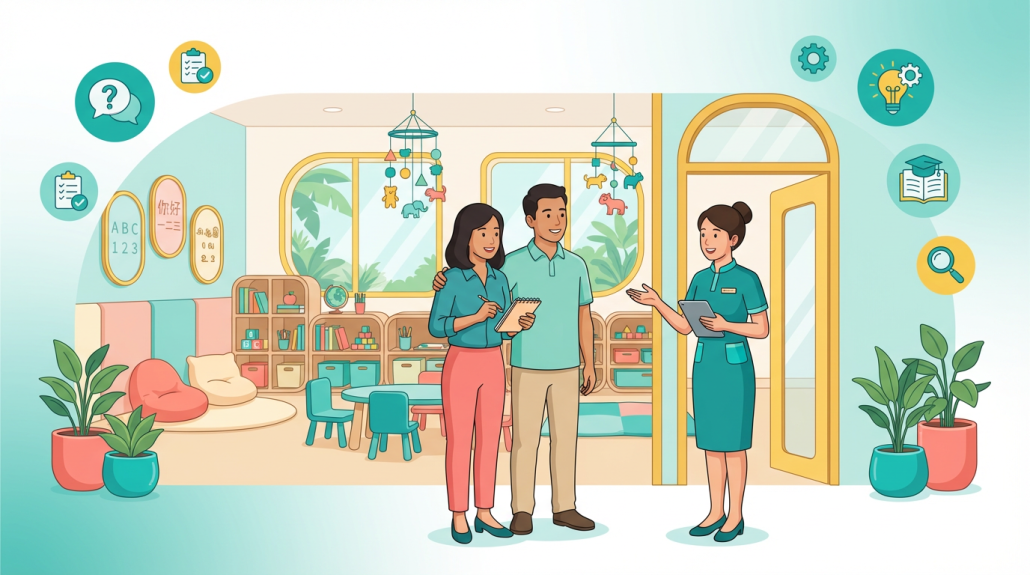
Walking into a Pre-school for the first time can feel both exciting and a little overwhelming. The bright colours, the tiny furniture, the cheerful displays on the walls, it all looks wonderful. But looks alone won’t tell you whether this is the right place for your child to spend some of their most formative years.
A Pre-school tour is your single best opportunity to look beyond the surface and ask the questions that truly matter. Many parents leave tours wishing they had probed a little deeper, only realising later that they forgot to ask about something important, such as the curriculum philosophy, how disputes between children are handled, or what happens if their child struggles to settle in.
This guide gives you the 10 questions every parent should ask during a Pre-school tour, along with guidance on what to listen for in the answers. Whether you are exploring your first option or comparing several schools, these questions will help you make a confident, informed choice for your child.
Why the Right Questions Make All the Difference
Choosing a Pre-school is one of the most significant decisions you will make in your child’s early years. Research consistently shows that high-quality early childhood education has lasting effects on a child’s cognitive development, social skills, and even long-term academic outcomes. Yet many parents focus primarily on location and fees, sometimes overlooking the curriculum philosophy or the quality of day-to-day teaching. A well-prepared list of questions transforms a school tour from a passive viewing into an active evaluation, and it signals to the school that you are an engaged, thoughtful parent, which is something great educators always welcome.
Question 1: What Does the Daily Curriculum Look Like?
Ask the school to walk you through a typical day, not just in broad strokes but in genuine detail. How much time is devoted to structured learning versus free play? How does the curriculum balance academic foundations with creative exploration and physical activity? A strong Pre-school curriculum should feel purposeful without being rigidly academic, as young children learn best through play, movement, and hands-on experience. Listen for a curriculum that has a clear educational philosophy behind it, rather than one that simply mirrors primary school expectations for much younger children.
It is also worth asking how the curriculum evolves as children move through different age groups. The needs of an 18-month-old differ dramatically from those of a child in Kindergarten 2, and the school’s programme should reflect that developmental understanding clearly.
Question 2: How Is Language Learning Approached?
In Singapore’s multilingual environment, language development is particularly important, and parents are right to ask detailed questions about how a school nurtures it. Does the school teach in multiple languages, and if so, how are they integrated throughout the day? Is there a risk that one language will dominate while others become token additions to the timetable?
At ChildFirst, for instance, trilingual learning is woven throughout the entire curriculum rather than treated as a separate subject. Children are immersed in English, Mandarin Chinese, and a third language, Coding, in a way that feels natural and contextual, not forced. This kind of genuinely integrated approach is what you should be looking for when you ask this question. Real language proficiency develops through meaningful use, not memorisation.
Question 3: How Does the School Incorporate Technology?
Technology in early childhood education is a topic that divides opinion, but the most thoughtful schools have a clear and considered position on it. Ask whether the school uses educational technology and, importantly, how it is used. Is screen time passive and unguided, or is it purposeful and teacher-facilitated? Does technology complement hands-on learning, or does it replace it?
Forward-thinking Pre-schools recognise that today’s pre-schoolers will grow up in a world where artificial intelligence is part of everyday life. Introducing age-appropriate AI and technology concepts through play and exploration, alongside coding basics such as those found in coding-integrated trilingual learning, helps children develop digital fluency without sacrificing childhood. That said, quality schools will always balance this with plenty of offline, creative, and physical experiences.
Question 4: What Are the Teachers’ Qualifications and Experience?
Your child will spend most of their time with their classroom teachers, so this question is non-negotiable. Ask about the minimum qualifications required for all teaching staff, not just the lead teachers. Are they registered with the Early Childhood Development Agency (ECDA) in Singapore? Do they receive regular professional development and training? High staff retention rates are also a good sign: children benefit enormously from consistent caregiving relationships, and a school with frequent staff turnover may signal deeper management or culture issues worth exploring.
Question 5: What Are the Child-to-Teacher Ratios?
This is one of those practical questions that parents sometimes feel awkward asking, but it is absolutely essential. Lower ratios mean more individual attention for each child, better supervision, and a calmer classroom environment. In Singapore, ECDA sets minimum ratio requirements, but excellent Pre-schools often go beyond the regulatory baseline. Ask whether the stated ratios are maintained throughout the day, including during meals, outdoor play, and rest times, not just during structured lesson periods.
Question 6: What Safety and Health Standards Are in Place?
Safety encompasses far more than locked gates and clean classrooms. Ask about the school’s visitor access policies, emergency protocols, and how they handle illness, both preventing the spread of sickness and communicating with parents when a child is unwell. Enquire about food preparation and allergy management if your child has any dietary needs. Schools that hold the Healthy Pre-school accreditation from the Health Promotion Board in Singapore have met independently verified standards for nutrition, physical activity, and hygiene, which is a reassuring mark to look out for.
Question 7: How Does the School Support Each Child as an Individual?
Every child learns differently, and great Pre-schools acknowledge this not just in theory but in practice. Ask how teachers identify and respond to individual learning needs, interests, and temperaments. What happens if a child is finding something difficult, or conversely, if they are ready to move ahead? How does the school support children who are shy, anxious about separation, or who have additional learning needs?
This is also a good moment to ask about the school’s philosophy on child development more broadly. Does it recognise the range of ways children can be intelligent and capable, going beyond traditional academic measures? Multiple Intelligences theory, for example, holds that children possess a variety of cognitive strengths, from linguistic and logical abilities to musical, spatial and interpersonal talents. A school that actively nurtures this breadth of potential will help your child discover what makes them uniquely capable.
Question 8: How Do Teachers Communicate with Parents?
Transparent, regular communication between school and home is a hallmark of quality early childhood education. Ask how teachers share updates about your child’s progress: is it through a daily report, a digital app, a weekly newsletter, or informal chats at pick-up? How quickly do staff respond to parental concerns, and who should you contact if you have a serious issue? Also ask what the school’s policy is on parent involvement: are families welcomed into the classroom, invited to observe lessons, or included in learning events throughout the year? A school that genuinely values parent partnership will have clear, confident answers to all of these.
Question 9: Is the School Accredited or Award-Recognised?
Accreditations and awards are not just wall decorations, they provide independent verification that a school meets or exceeds established standards. In Singapore, the SPARK (Singapore Pre-school Accreditation Framework) certification is the gold standard for Pre-school quality assurance, assessed by ECDA. Ask whether the school holds SPARK certification, whether all its centres are certified, and how recently the certification was renewed. Any reputable awards in curriculum innovation, language education, or child development are also worth enquiring about, as they indicate a school that continually strives to improve and be recognised by its professional community.
Question 10: How Does the School Prepare Children for the Future?
This might be the most revealing question on this list, because it invites the school to articulate its core educational vision. What kind of learner, and person, does the school aim to develop? Ask specifically how the programme builds skills that will matter as children grow: critical thinking, creativity, collaboration, adaptability, and communication. Ask how the school balances academic readiness with the development of emotional intelligence, resilience, and confidence.
The most future-ready Pre-schools think carefully about the world their students will inhabit. Developing human intelligence skills, such as empathy, creativity, moral reasoning, and social awareness, alongside technical literacy ensures that children are prepared not just for primary school, but for a lifetime of meaningful learning and contribution. A school that can speak fluently and passionately to this question is one that genuinely cares about its children’s long-term flourishing, not just their next assessment.
Making Your Final Decision
No checklist can fully capture the feeling of walking into a Pre-school and sensing that it is the right fit for your child. But the right questions will get you much closer to that certainty. When you visit, pay attention not just to the answers you receive, but to how they are given. Do staff speak about children with warmth and respect? Do the children in the classrooms look engaged, settled, and happy? Does the environment feel safe, stimulating, and cared for?
Trust your instincts, but let informed questions sharpen them. A school that welcomes your curiosity, answers transparently, and clearly has a thoughtful educational philosophy behind everything it does is a school worth considering seriously. Your child deserves the highest level of care and intentionality in their earliest years of learning.
Ready to Ask These Questions in Person?
Visit ChildFirst to experience our award-winning trilingual curriculum, SPARK-certified centres, and future-ready approach to early childhood education, and see for yourself why so many Singapore families choose us.